

Potential Whales: $0.44 Median CPF and High-Value Fan Testing for OnlyFans
Case Summary
We were hired to lower Instagram follower acquisition costs and improve downstream conversion into OnlyFans.
The project quickly evolved into a harder question: could paid acquisition help us identify higher-value fans instead of simply bringing in cheap followers?
Across 27 Meta launches, we spent $293.25 and acquired 760 Instagram followers at a median CPF of $0.44.
We used Meta Ads, OSINT, audience segmentation, age splits, lookalikes, and funnel analytics to separate cheap audience growth from the harder problem of finding fans with higher monetization potential.
Author’s Preface
My name is Bogdan. I run the agency.

There is a line I did not come up with lightly. It became our mission: to seek truth between the one who gives and the one who seeks. Between the person who puts themselves out there and takes the risk, and the person who comes looking for experience, attention, comfort, validation, and sometimes fantasy.
The adult niche fits that mission exactly. This is where it belongs.
Sexuality is an irrepressible force. It has always been part of human life – in different forms, in different packaging, under different names. It pushes through bans, habits, and “proper” language. That is exactly why so much tension gathers around it: shame, fear, labels, whispering, sharp judgment, polar opinions. At some point civilisation starts to feel like a screen. Everything looks “decent” on the outside, while behind the screen people have swept away needs that are simply part of being human.
I see that as a problem.
As long as something natural is forced to live in the shadows, myths, grey practices, exploitation, and manipulation grow more easily around it. There is less clarity, fewer rules, and less safety. The shadows are never neutral. They always take something from the people who are already vulnerable.
That is why this case is published openly and under our own name, not hidden behind some separate mask.
I am putting it into public view both for people inside the adult niche and for our future clients in more conventional industries. I am publishing it as a statement that this space deserves to be studied properly, understood properly, and supported through systems that help adult creators grow in a measured way.
Analytics, infrastructure, testing, reporting, discipline. In this niche especially, the process needs rails instead of chaotic spikes.
There is another ethical layer here – the motives of the people who come into adult work.
Where money appears, different kinds of agents appear with it, in the market sense of the word.
Some people come for the money, full stop. They need to solve a financial problem and close that chapter of life. No extra publicity. No desire to build a brand. It is temporary work, a phase, a way to steady the ground under their feet. Picture someone telling themselves: “I’ll do this for a year or two, then I want to forget it ever happened.”
Some people come for self-realisation. They build a brand. They work like artists, even if many would refuse to use that word. They touch the most vulnerable and irrational fibres of the human psyche – and sometimes of psychophysiology too – building products around the kinds of kinks many people would only ever confess to a PH search bar.
It matters to me not to diminish the dignity of the first group and not to romanticise the second. Both have a right to their own route, and both carry a price for getting it wrong.
We are not an agency that works only in adult. That is useful in practical terms.
We can help someone build a stable conversion engine and close that chapter. We can help someone build a brand and endure the long distance. We can move with a person into another field if they decide to leave this one behind. In real life it can look like this: someone goes through this phase, earns what they need, draws a line under it, launches another business, and brings us in again as the team that knows how to work carefully and measurably.
Or someone builds a brand in adult and has no intention of leaving any time soon, so they bring us in to turn conversion chaos into an actual system and free up their attention for the parts of the work that matter most to their self-realisation.
This case will show that good work is rarely fast. The result is assembled out of small things: how links are tagged, how segments are built, how reporting is kept, how decisions are made, and how people speak to each other.
So for those who are here simply to earn and move on, the message is this: patience is still required if you want a side income that actually works, even for a limited stretch of life. And for those who want to build a brand in adult, the message is the same: patience is still required if you want to build something that lasts.
Otherwise, do not work in adult at all – just as you would not build any other business.
Tertium non datur.
1. About the Project
The Virgin project focused on acquiring Instagram followers for an adult OnlyFans monetization funnel. In practical terms, the job was to turn Instagram audience growth into downstream conversion toward OnlyFans. On the client side, we were working with the OnlyFans agency Meowtrics (Their contact information for review verification will be in the «Credits» section – this is the very end of the case).
We had already seen a similar pattern in an earlier OnlyFans case: cheap follower growth did not automatically solve downstream conversion.
Ethical note: in this public version of the case, the model’s real name is intentionally hidden in the body text. The reason is simple: she was not planning to build a long-term public brand, and we do not consider it appropriate to amplify her digital footprint beyond what the project itself required. That is why, throughout this case, she is referred to as Virgin.
Editorial note: some screenshots in this case remain in Russian. The reason is simple: the project was run with a Russian-speaking client team, and part of the operating environment during the work was also Russian-language. We have kept those screenshots in their original form where that better preserves the documentary accuracy of the case.
2. Goal
We were tasked with pushing CPF into the $0.07–$0.14 range and, together with the Meowtrics team, improving the Instagram-to-OnlyFans transition rate to 25%.
At the start of the engagement, the Instagram-to-OnlyFans transition rate was about 17.5%. The average daily flow from Instagram into OnlyFans was around 20 users, so beyond pure follower growth, our strategies also had to support a larger and more stable downstream flow.
A separate downstream metric was paid-behavior conversion inside OnlyFans. The goal there was to improve conversion into paid behavior from 7.5% to 15%.
As the case will show, that framing shifted almost immediately. During the very first discussion around the first traffic results, we were given the client’s internal thinking on “whales” – the users who generate the overwhelming share of revenue. Their side put it bluntly: “In our niche, 95% of revenue comes from 5% of clients, and 95% of clients generate 5% of revenue.”
We did not throw away the agreed CPF target of $0.14. We kept it in view as an idealized benchmark. At the same time, we had to treat the emergence of a new “whale” as the more meaningful priority. Even if a whale came in at a cost of $50, that could still be cheap relative to their Average Revenue Per Paying User (ARPPU). Put simply: even if we acquired a whale for $100, that user could still spend more over time because of the strong fit between the model and that specific high-value profile.
That made one thing visible very early: in the adult niche, there are at least two types of target subscribers:
- those who may become qualified leads and account for the “lighter” layer of revenue;
- those who may become high-priority qualified leads and generate the heavy share of revenue.
The first group is usually limited to the base subscription. The second group goes further and buys additional formats inside the chat dynamic with the model. That is the layer where upsell and cross-sell potential starts to matter through content and interaction.
3. Timing and Budget
The work ran in two main phases: February 26 to April 15, 2025, and April 16 to May 15, 2025.
The ad spend cap through May 15 was set at $400-$500. The actual media sample for the Followers campaign in Meta, covering March 21 to April 26, came to $293.25 and delivered 760 followers, which corresponds to an average CPF of about $0.39.
That is the high-level view. Now for the full story…
4. How the Work Began: A Chronology
February 2025 — access, asset architecture, and protection against total restrictions
What the problem was
This niche is such that any mistake in asset management can lead to a situation where everything gets restricted at once: the ad layer, access, and the ability to keep operating at all. On top of that, without a properly assembled Business Portfolio and sensible roles, 2FA, and verifications, working in Meta turns into a lottery.
How we approached it
We built an access model around two Facebook accounts and two Business Portfolios:
- one Business Portfolio as a container for the core assets, where the Instagram accounts and, if needed, the Business Page are held;
- a second Business Portfolio as the working ad layer – effectively expendable – where assets are added via partner access and where the Pixel and Ad Account are created.
Separately, we documented the requirements for 2FA via app, the email used for verifications, the need for the advertising Facebook account to look like a real human account, and an operating mode in which passwords would not have to be handed over directly, because setup could be done on a call with screen sharing.
Why we did it
To manage risk. If the advertising layer is hit with a total restriction, partner access can be cut off while the core assets remain protected inside the container. It also makes the process more transparent: who owns what, who can detach what, and where the actual point of failure sits.
What result we achieved
We ended up with an architecture in which advertising and asset safety were separated. That created the foundation for the next steps – Pixel setup, payment configuration, and traffic launch – without inviting fatal failure modes.
6–15 March 2025 — identifying the main cause of delay: bans triggered by bot-like behaviour
What the problem was
We planned to launch traffic quickly, but ran straight into the fact that fresh or “oddly” created Facebook accounts and business structures get flagged, restricted, or pushed into review. Specifically:
- registration via ProtonMail was restricted almost immediately;
- one account that survived for roughly half a day was sent into review after a spike in activity, with too many likes and too many group joins;
- several attempts to pass verification did not lead anywhere.
How we approached it
We broke the problem down technically, stripped away the mystique around “random bans”, and assembled a practical trust-building plan for the account. That plan had two axes:
- behavioural patterning, so the account would not look like a bot during the first one to two weeks;
- payment history, because several successful charges help signal that this is a real advertiser.
A rough example of human-like activity per hour versus bot-like activity looked like this. Facebook is unlikely to care about the exact order of actions; it is far more likely to react to overall actions per hour or per day.
| Activity Type | Human | Bot |
|---|---|---|
| Likes | 1-5 | 10-50 |
| Comments | 0-2 | 5-20 |
| Posts, stories, reposts | 0-1 | 5-15 |
| Friend requests | 0-1 | 10-30 |
| Joining groups/pages | 0-0.5 | 5-10 |
| Messages sent | 0-2 | 10-50 |
| Total actions per hour | 1-10 | 50-150 |
We also built a step-by-step timeline where actions were distributed by day and separated by risk level:

Separately, we covered phone confirmation via WhatsApp, email confirmation via Gmail instead of ProtonMail, a neutral Business Page, and minimal organic activity.
Then we separated out the next steps as their own layers:
- Ad Account creation and payment setup;
- a small retargeting test on low budgets;
- partner access only after that;
- the main traffic launch only after all of the above.
We also formalised rules for minimum activity, so Facebook would see gradual growth rather than a sharp jump from zero to dozens of actions:
- Business Page and Business Portfolio on the client side;
- organic posts on the Page for baseline naturalness;
- Instagram connected to the Business Page;
- admin roles assigned;
- Ad Account created and payment method added;
- verification statuses checked;
- small retargeting on $5-$10 as a soft first charge;
- partner access granted only after that, and the core campaign launched afterwards.
Why we did it
Because without that layer, any attempt to “quickly create BM / Ads / Pixel and go” creates a serious risk of getting restricted before hypotheses can even be tested. First you have to secure the right to buy impressions consistently at all.
What result we achieved
A workable operational principle emerged: an account that behaves gradually survives longer without bans, while the key risk turned out to be anomalous activity compressed into a short interval.
That gave us a viable starting position for the main follower acquisition campaign without breaking the asset structure and without generating unnecessary triggers for restrictions.

💡
Why did we reject the option of buying pre-warmed accounts?
Because that route does not offer the level of asset control required for systematic work.
For example, if I need to add a Business Page in order to run traffic under a different surface identity, that Business Portfolio may immediately trigger a phone verification request, and of course that phone number will never actually be available to us.
In practice, that means such an account can be used to push traffic, but without the full layer of analytics that helps uncover many of the optimisation steps needed to build a real conversion funnel.
In Parallel with the First Traffic Launch
Reddit OSINT: what we were doing and why
The problem was this: follower and click metrics arrive quickly, but the transition into OnlyFans runs into a subtler question – why does a person pay at all, what exactly are they buying, which triggers lead them toward payment, and which ones kill the desire to go any further from Instagram. At bottom, this is a question of what kind of value a person expects from a paid interaction. That layer matters because it directly affects the economic output of our work.
That is why, from the very start, we set up a parallel research track instead of building warm-up and retargeting logic blindly. We ran OSINT on Reddit and collected relevant subreddits where the audience was already describing its motives in its own words, without the usual “survey mask”. That gave us an initial map of meanings, which we then translated into a set of questions and scenarios that could be used as unstructured focus groups.
What we were looking for in those discussions:
- Which reasons people name when explaining why they pay for OnlyFans and webcam content.
- Which formulations repeat across different users and different threads.
- Which elements of the “experience” matter more: the content itself, or communication and a sense of personal connection.
- Where the boundaries lie: what creates a sense of value, and what produces disappointment after subscribing.
What we saw in the collected material:
People repeatedly describe payment as the purchase of connection and interaction. Across different formulations, several motives kept recurring: the desire for personal communication, a “girlfriend experience”, the ability to influence content, and a sense of personal attention. We also saw recurring themes of parasocial attachment, specific fantasies, needs around control or influence, and more practical motives such as “I have spare money”, though those appeared more as secondary factors than as the core.
How we turned OSINT into an action plan
We prepared a set of research questions that could be posted in relevant subreddits as focus prompts in order to gather more material for concrete conversion hypotheses.
These questions were designed as a diagnostic tool. In substance, they covered four zones:
- what exactly creates the feeling of personal familiarity and closeness;
- what makes a subscription feel “worth the money”;
- what influences the decision to subscribe or postpone subscribing;
- what causes disappointment after subscribing, and where the boundary lies between acceptable and unacceptable content or communication.
We also drafted the framing around those questions. It mattered that they should sound like a real person trying to understand motivation, not like a marketer “collecting insights”. That increases the chance of getting usable responses rather than canned reactions.
Where we planned to publish them
We assembled a shortlist of subreddits as possible entry points for these unstructured focus groups:
reddit.com/r/AskRedditNSFW/reddit.com/r/questions/reddit.com/r/AskMen/(with an obvious moderation risk)
Traffic results for 24–29 March 2025 and the turn toward “whales”
We started with a control launch and an initial CPF/CR baseline. After that, it became clear that this would require sequential segment analysis rather than blind scaling.

Then, in the intermediate review, we got a very clear signal: age was already showing a leader, while several groups clearly needed separate validation.
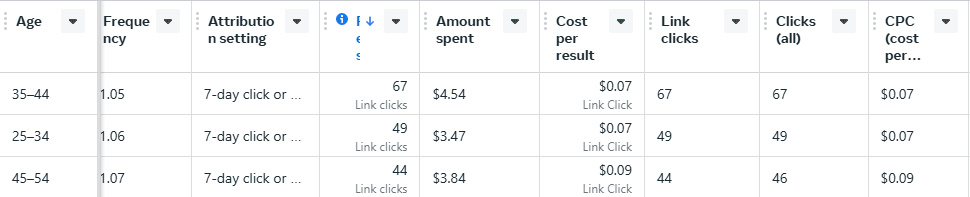
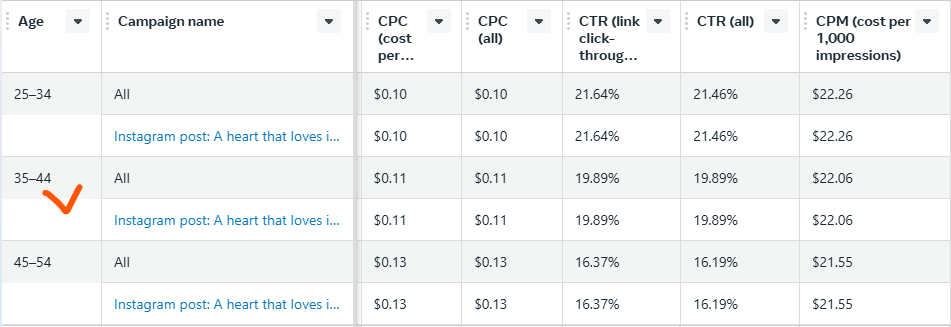
At the next step, we ran an age split with the same creative across 25–34, 35–44, and 45–54, and the hypothesis was confirmed with actual data: 35–44 delivered the strongest combination of subscriber cost and conversion.
Here we compare the first half of the age segments (25–34 vs 35–44) on the same creative.
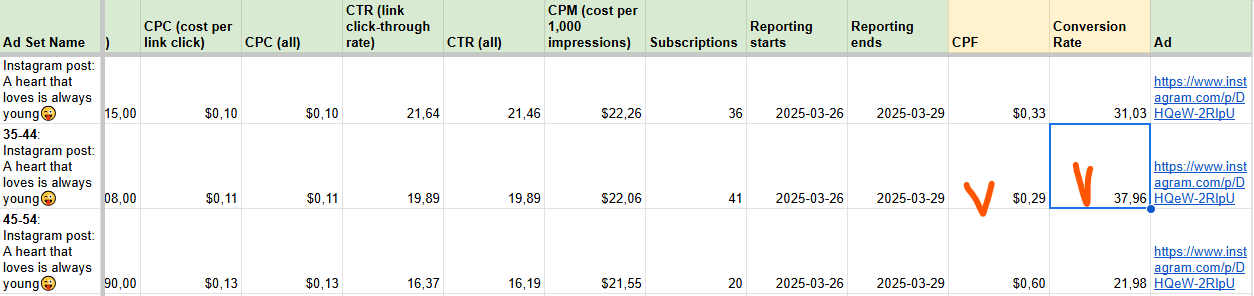
And this is how it looked inside Ads Manager / Ads Reports.
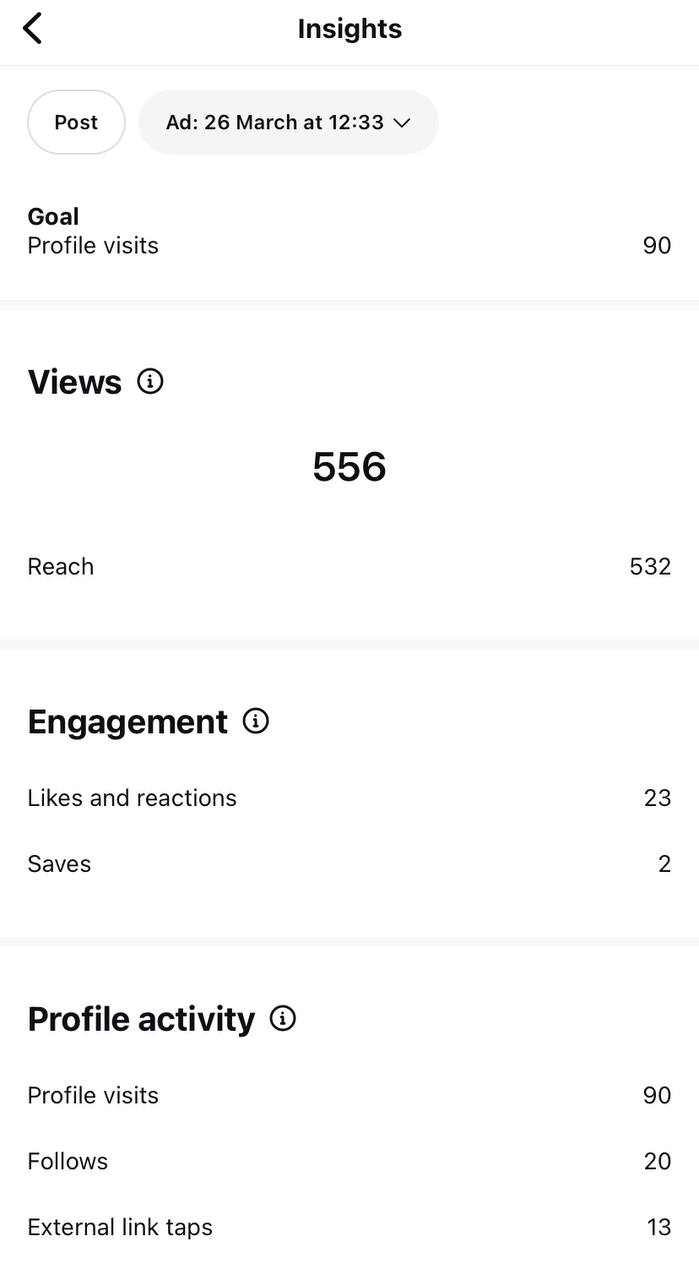
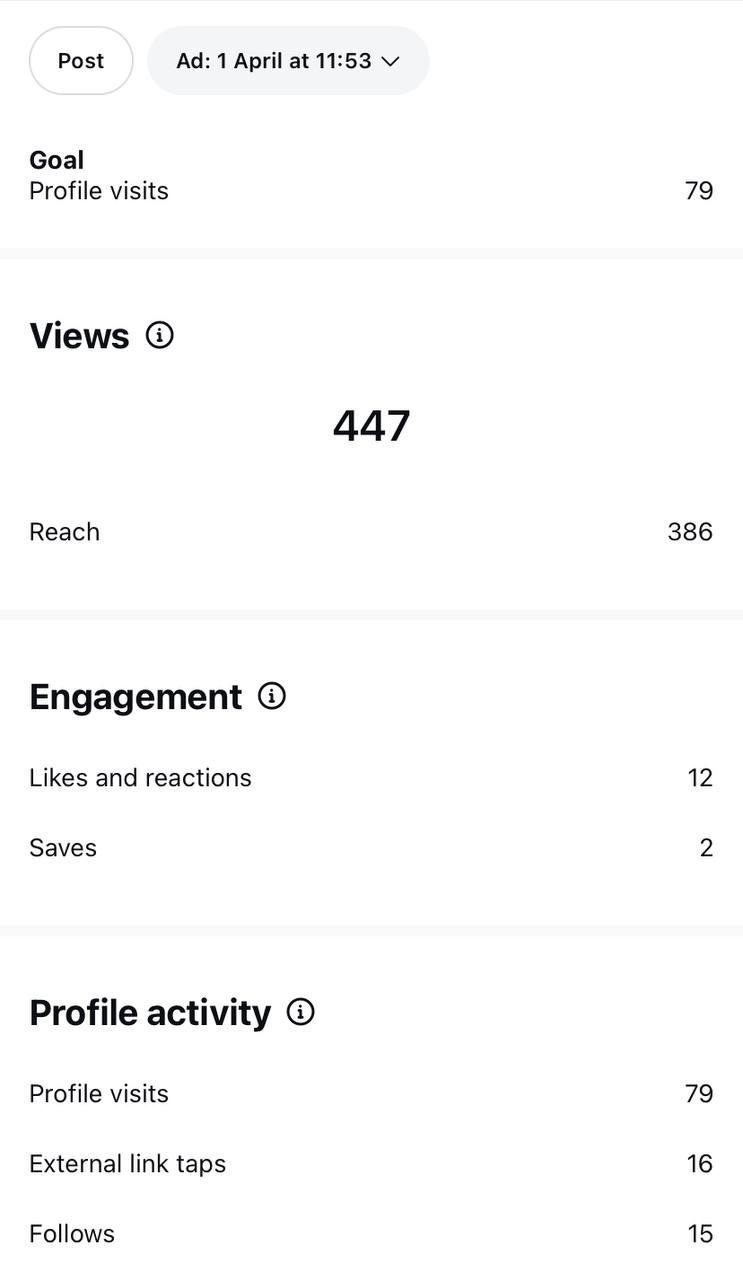
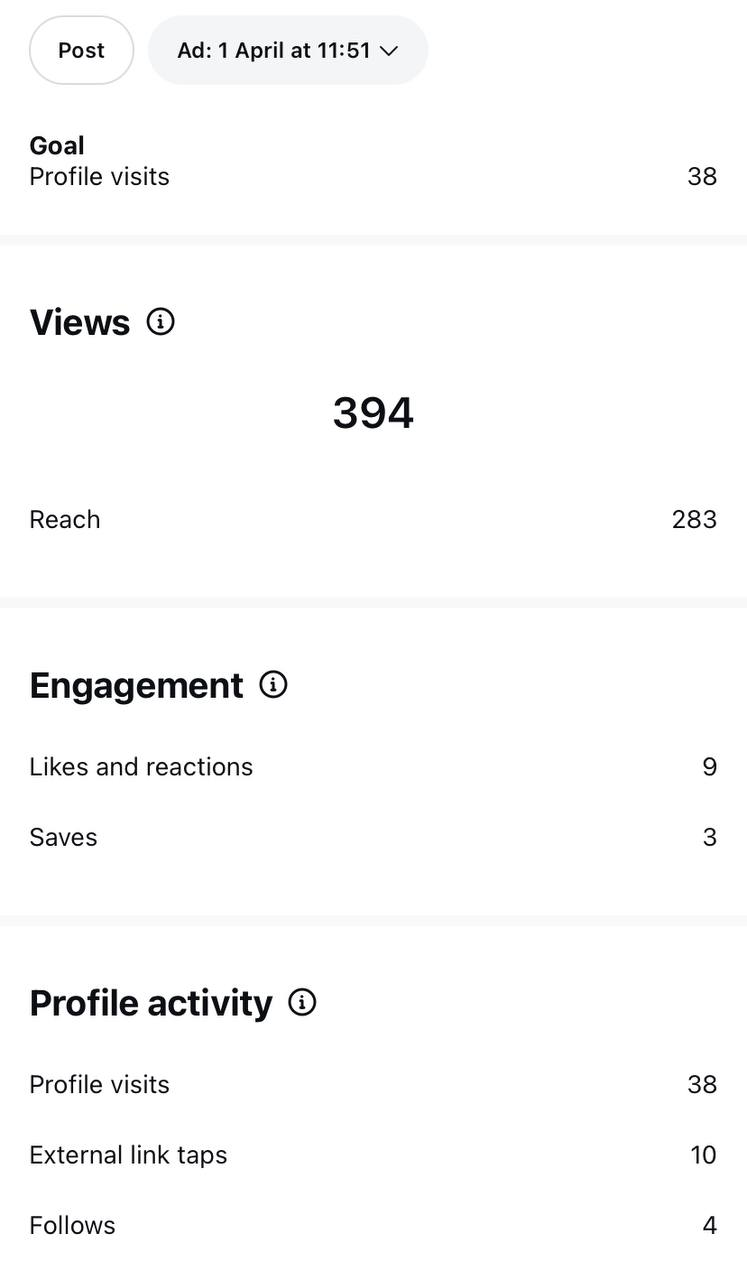
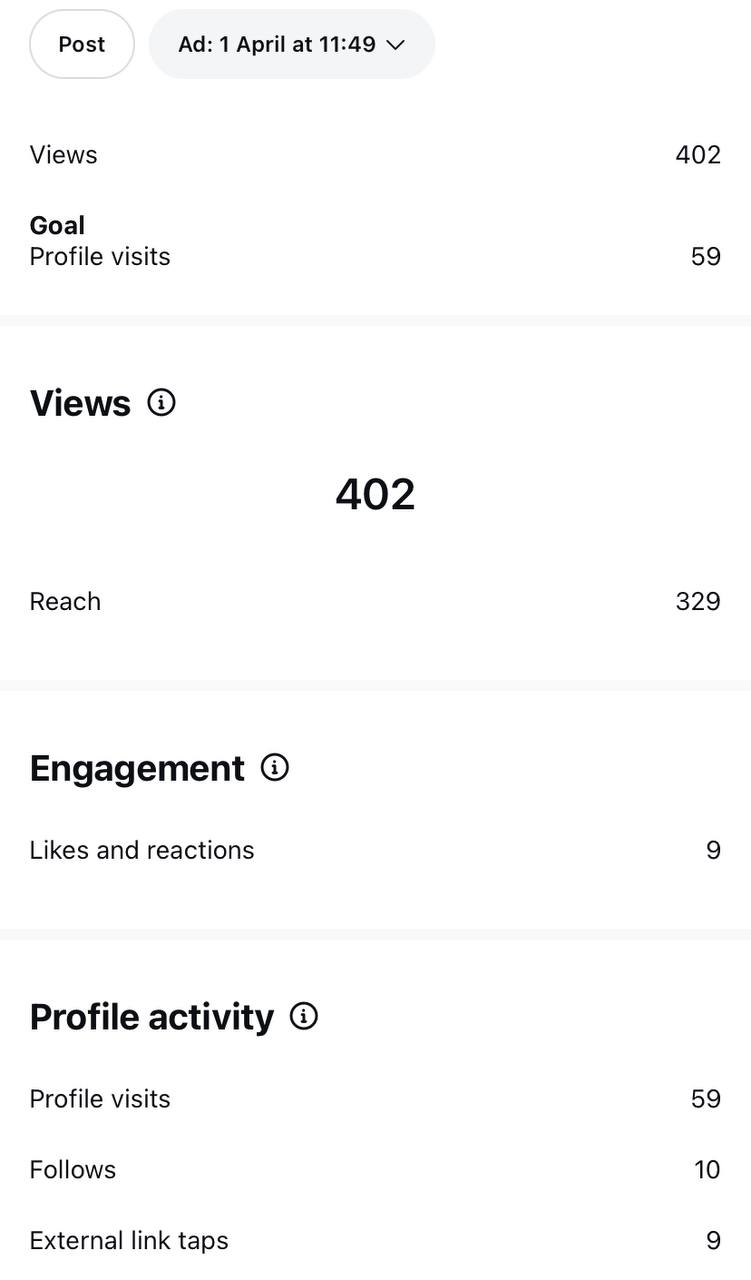
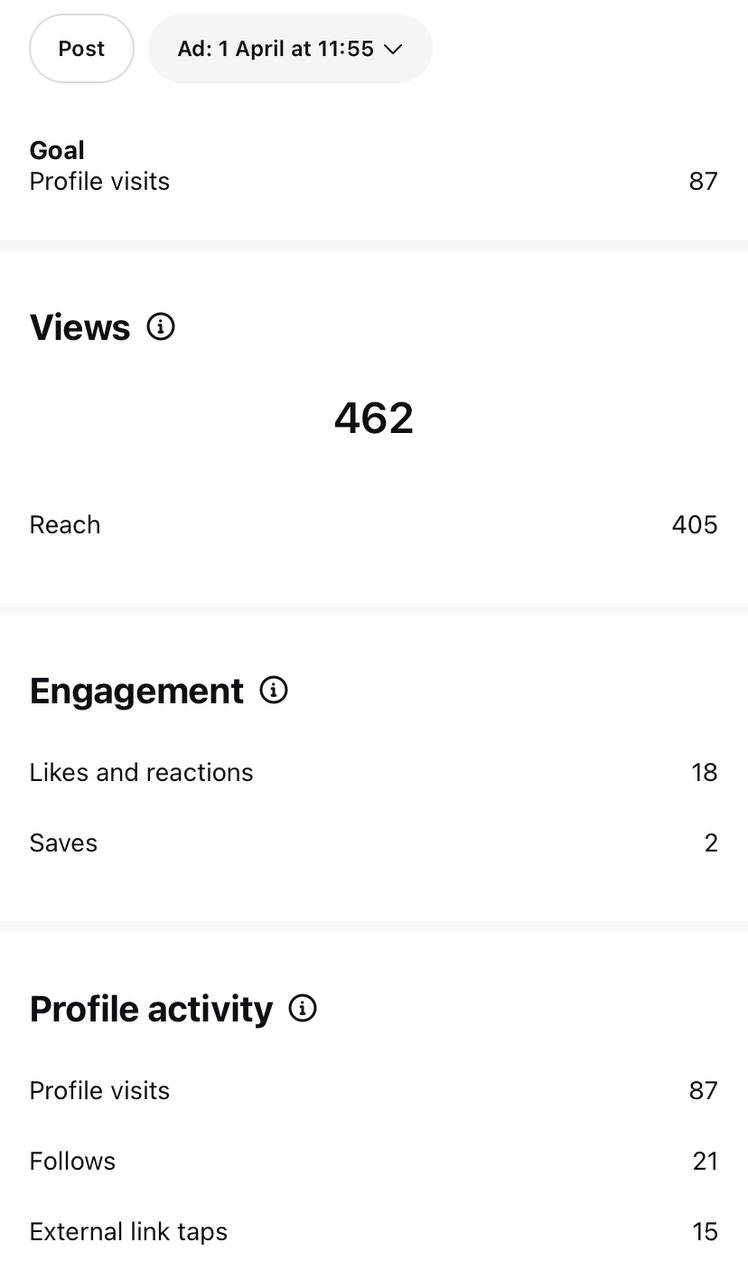
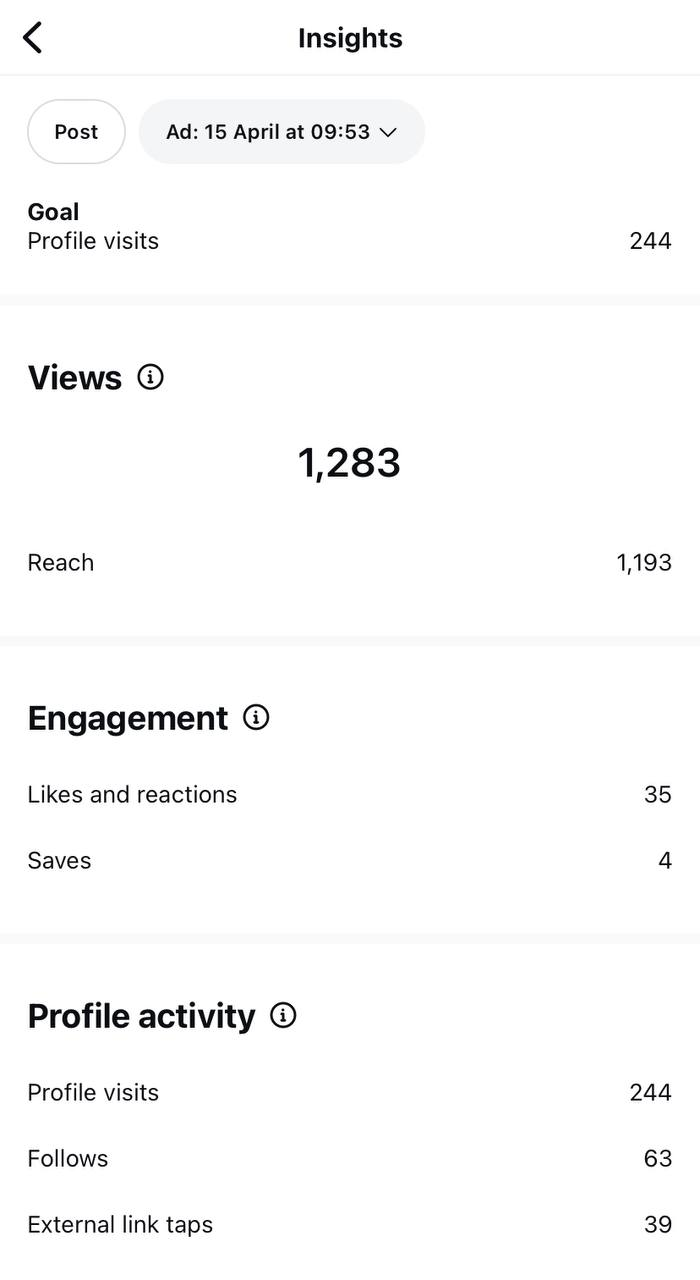
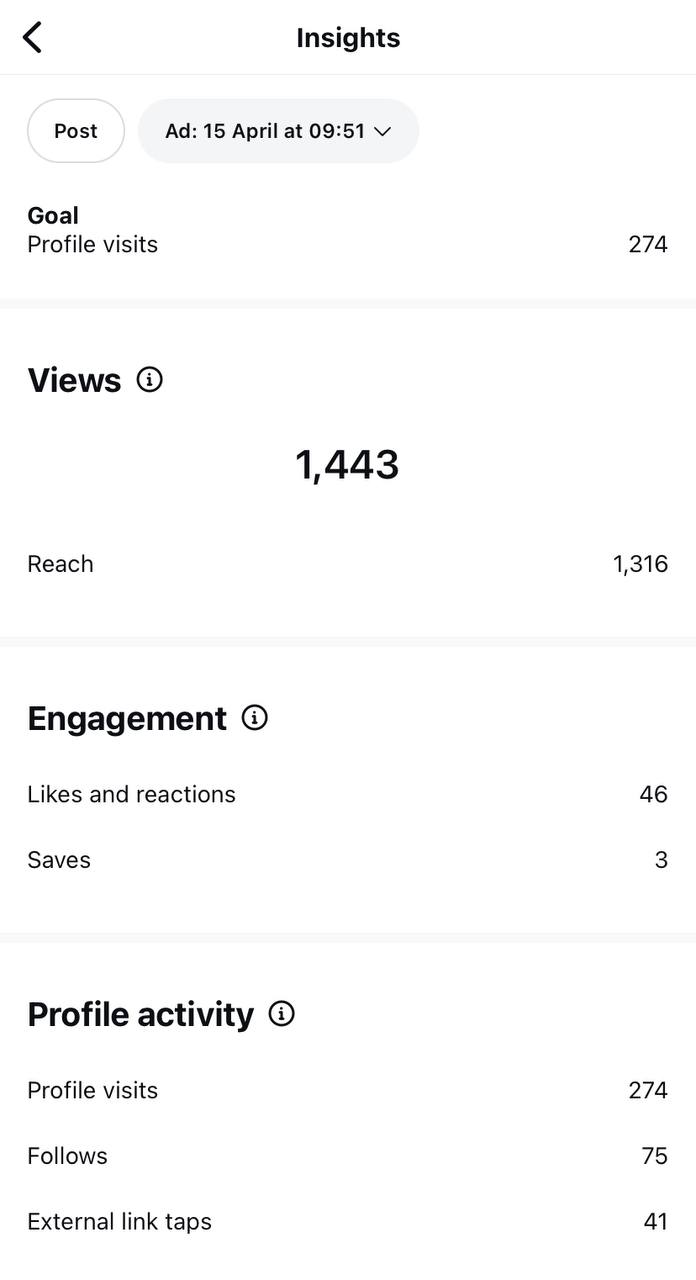
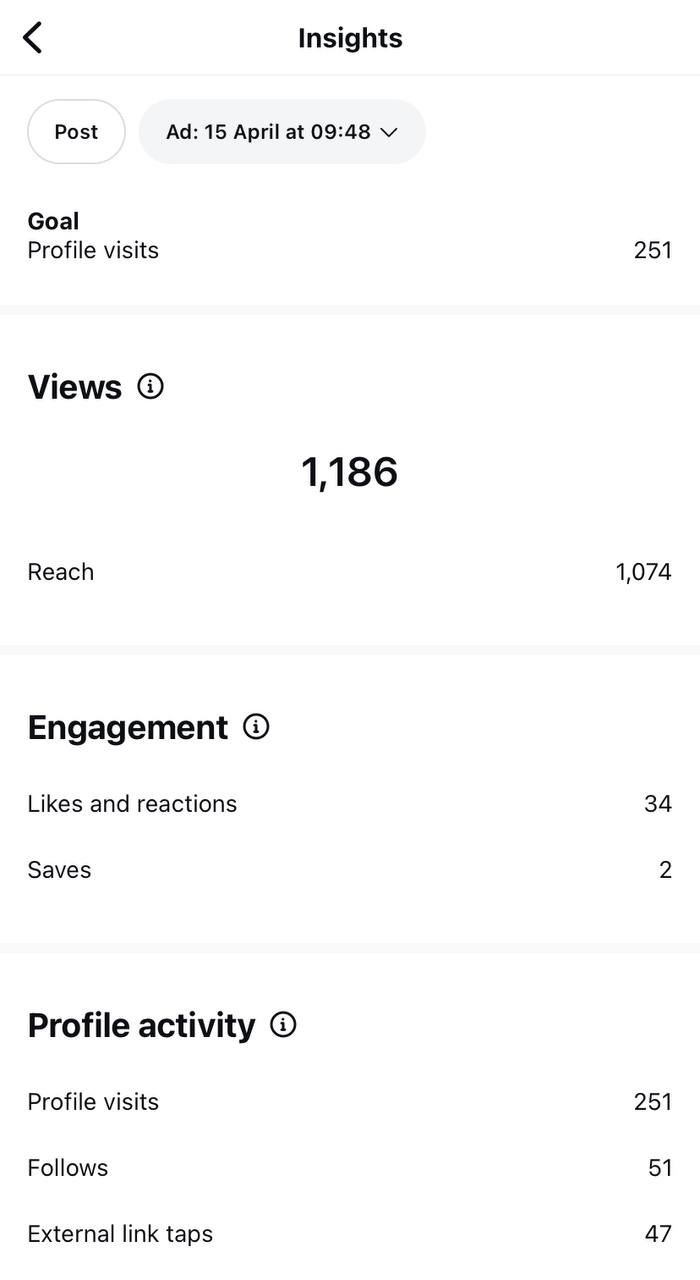
To avoid overreading the result, we also cross-checked the launches against the metrics of the actual posts.
First screen: this was the third-place entry in the table above.
Second screen: this was our winner – the one where you can see 41 followers.
Third screen: this was our second winner.
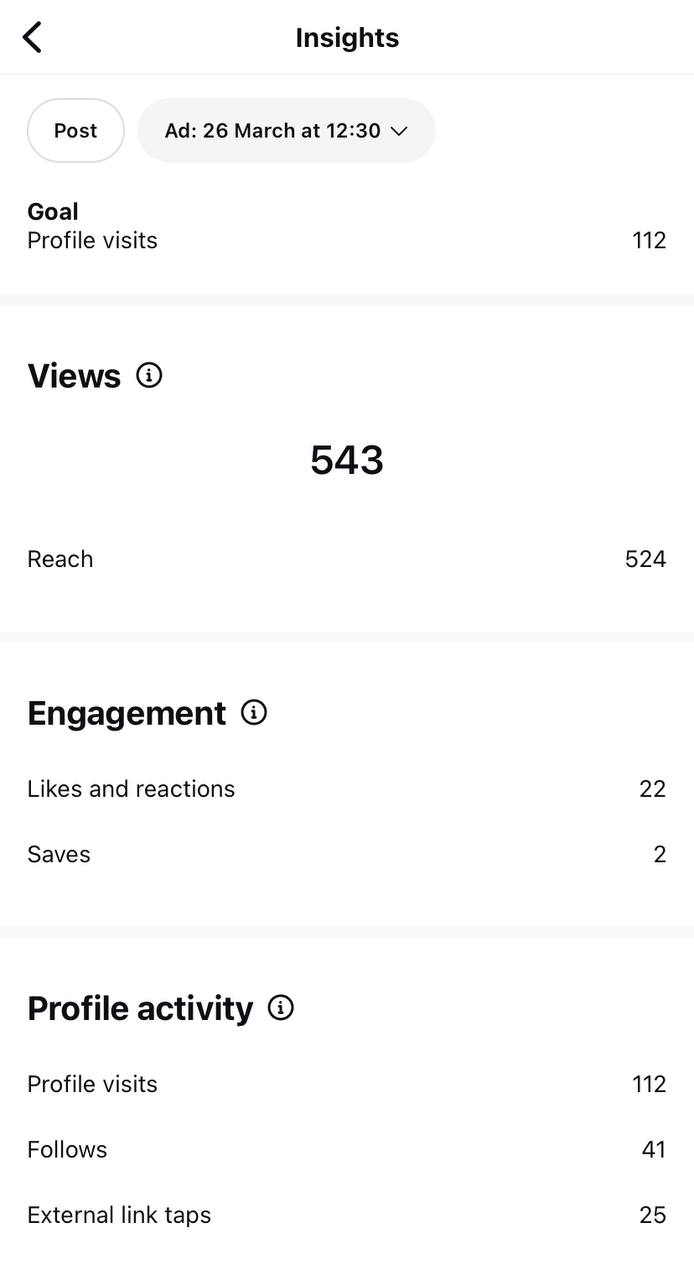
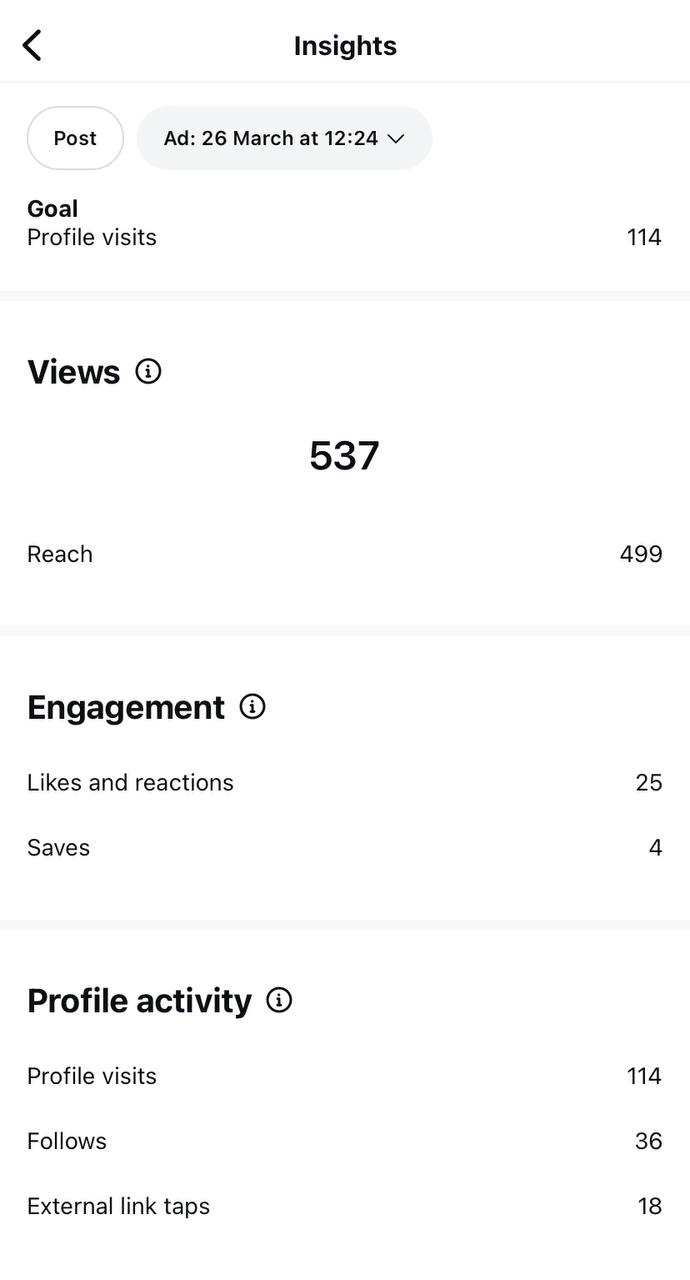
After that, we were immediately given the client’s materials on “whales” – profiles and notes their team had already been collecting. We analysed that material, stripped away the broader and blurrier formulations, and built a working Buyer Persona for the high-value segment – the “whales”.
From there, we brought two layers together into one decision model:
- traffic metrics, meaning where CPF and CR were actually stronger;
- the behavioural profile of the “whale”, meaning why that segment might monetize more deeply.
Pornhub insights and age structure reinforced that hypothesis: the traffic winner began to line up with the psychographic profile of the audience it made sense to prioritise in later launches.
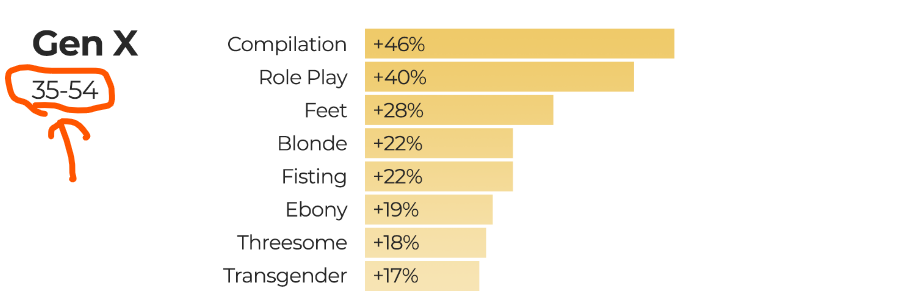
From that point on, all launches were tuned around the age spread accordingly. Very quickly, both the data and the analysis were pointing toward the strongest age range for the likely emergence of a “whale”.
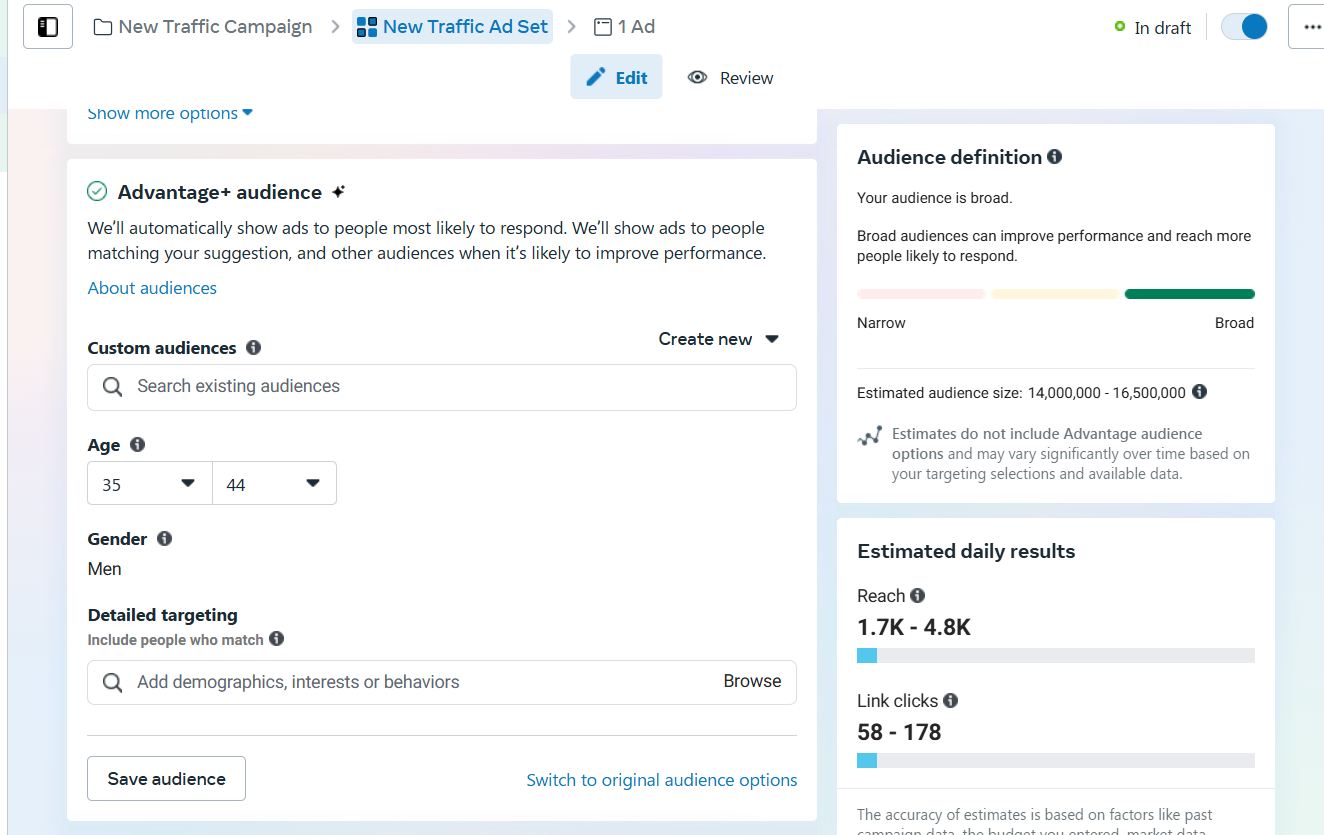
To many people this might sound intuitively obvious. But if you work under strict analytical discipline, then every claim about the funnel has to be covered by verifiable data. That is exactly what we did.
The most important outcome of the analysis of the high-value segment material was that we stopped thinking vaguely in terms of the “middle class” and narrowed the focus toward a more precise psychographic profile: men aged 35–54 (with traffic data leaning closer to 34–45), white-collar, entrepreneurial or managerial type, based in the US, concentrated in 3–5 key states.
The reason was simple: “middle class” is an economic category with far too much spread inside it. That was not precise enough for our task. We needed behavioural and emotional precision, because that is what determines the depth of monetization in this case.
This segment consists of knowledge workers: people in finance, law, IT, audit, management, real estate, international payments, and crypto. Their everyday life is shaped by cognitive load, responsibility, routine, and stress. Against that background, “external” interests like fishing, hunting, car mechanics, sports, music, and games appear quite naturally. Those interests are a way to switch off an overheated mind and recover a sense of control, simplicity, and living contact with oneself.
At the level of relationships, the pattern was readable: care, stability, respect for autonomy, emotional involvement, while the sexual trigger remained fully present. That led to a working communication formula: flirt in the visual layer, care in the text, with the strongest narrative lines revolving around loneliness, support, protection, and small personal victories.
The key hypothesis was that the 35–54 segment converts better for several reasons. Purchasing power does matter here. But on top of that, the model’s emotional signal seems to meet an internal deficit in the audience – the need to be seen, accepted, and emotionally held.
One more important insight: part of the audience may suspect that the person writing is not actually Virgin herself. Even so, they continue to engage. If that is true, then this is a classic mechanism of suspension of disbelief: a person consciously accepts the fiction so as not to destroy the emotional experience.
We have now encountered confirmation of this idea twice inside the adult niche. It is also indirectly reinforced by the growth of similar AI products: that suggests that part of the consumer base consciously wants the “show”. At the same time, a separate category of whales still exists – people who specifically want authenticity and the model’s direct personal time.
So within the adult niche, one viable version of the “whale” looks like this: “I understand that this may not be fully authentic – but I choose to believe, because what matters to me is what I feel here.”
That is where the central image of the ideal Whale comes from: not a “naive” fan, but a person willing to sustain a parasocial bond because it closes part of their emotional needs faster, more safely, and more predictably than real intimacy.
That is also why adult creators should first design the “show” of parasocial intimacy for the high-value segment. Then they need to determine which subtype of white-collar audience matches that scenario best, and matches the model as the central star of that scenario.
The important questions are these: What lack is this bond compensating for? Why does a person choose this format instead of – or alongside – real relationships or therapy? Why do they stay specifically with this model? And what makes her emotionally “more right” than competitors, even without exclusivity?
The answers to those questions directly shape the scaling strategy and the future expansion of the high-value segment.
4.1. April 2025 — state split and the move toward a transparent funnel
We launched a split test across 7 US states on an audience of men aged 34–45, using a 1% LaL based on Virgin’s followers. The goal was to test the hypothesis that a more mature audience would show stronger engagement in regions with:
- historically stronger CPC performance,
- higher subscription CR in previous promos,
- mentions in Pornhub Insights connected to foot fetish interest.
We matched the promo screenshots against the regional CSV data. The result looked like this:
- CR (subscription per click) reached 27.78% in Florida and 25.30% in Texas.
- The lowest CR was 15.65% in California.
- Subscriber cost ranged from $0.32 to $0.80.
- The average subscriber cost came out to $0.51.
That means the average price was 37 cents above the benchmark $0.14, while even the best subscriber price was still 18 cents above it.
All campaigns used the same creative. Below is how those promos looked when tied back to the same post.
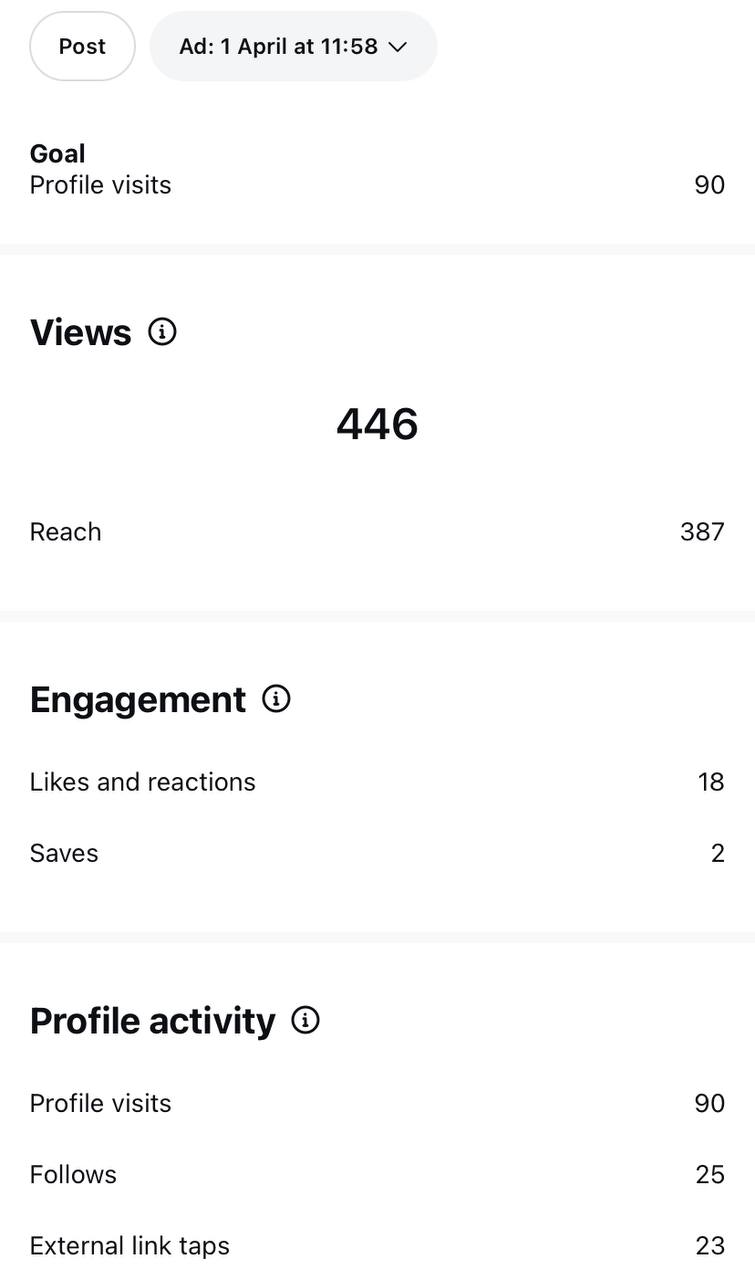
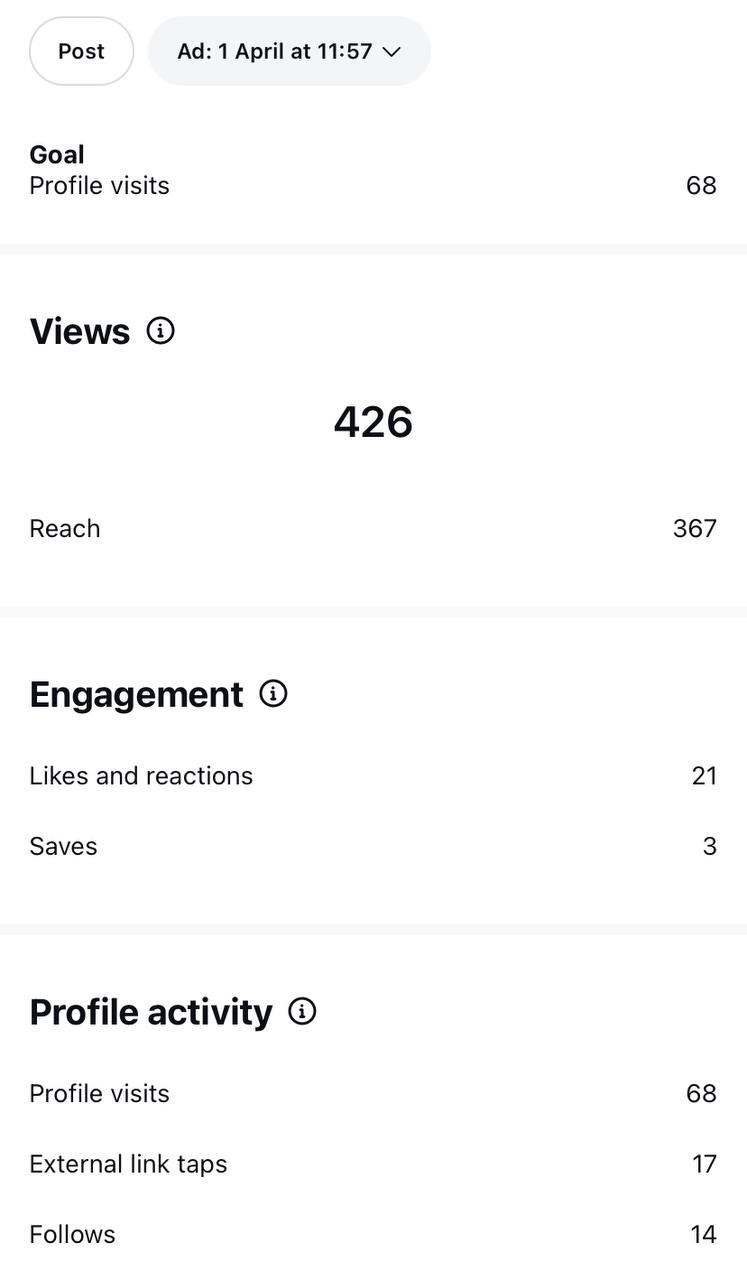
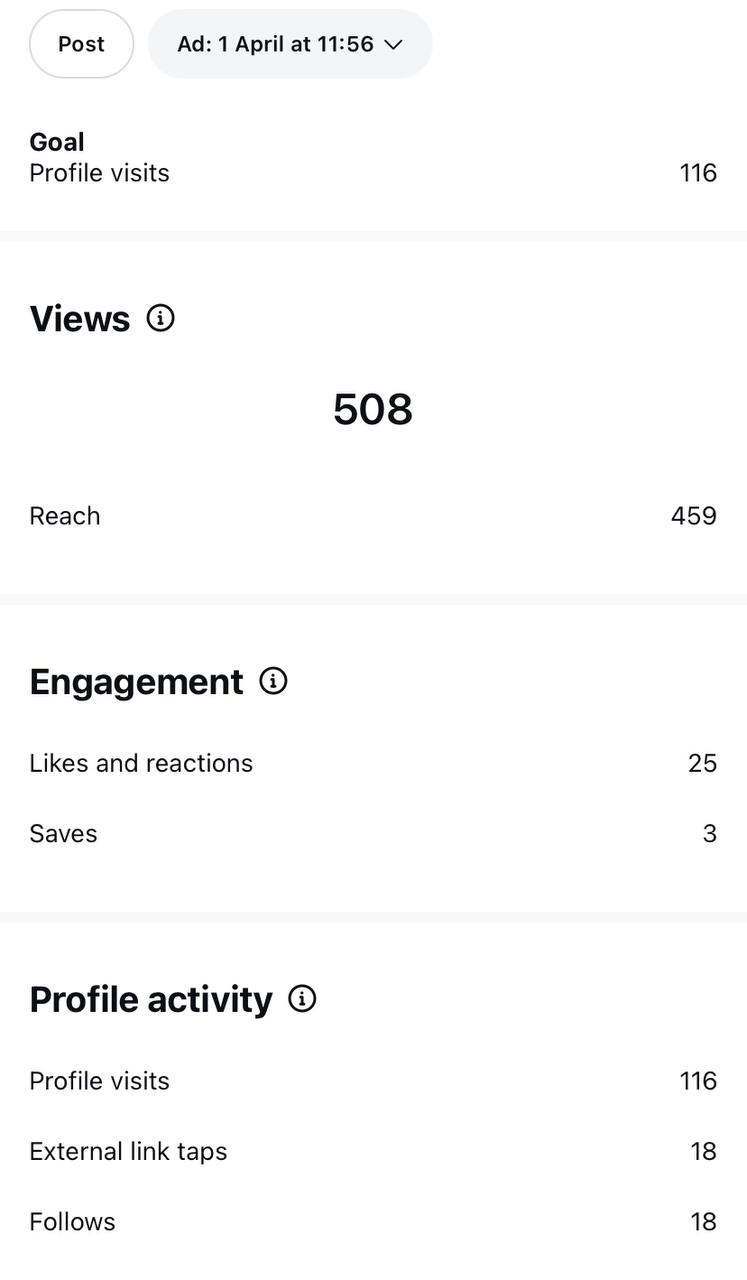
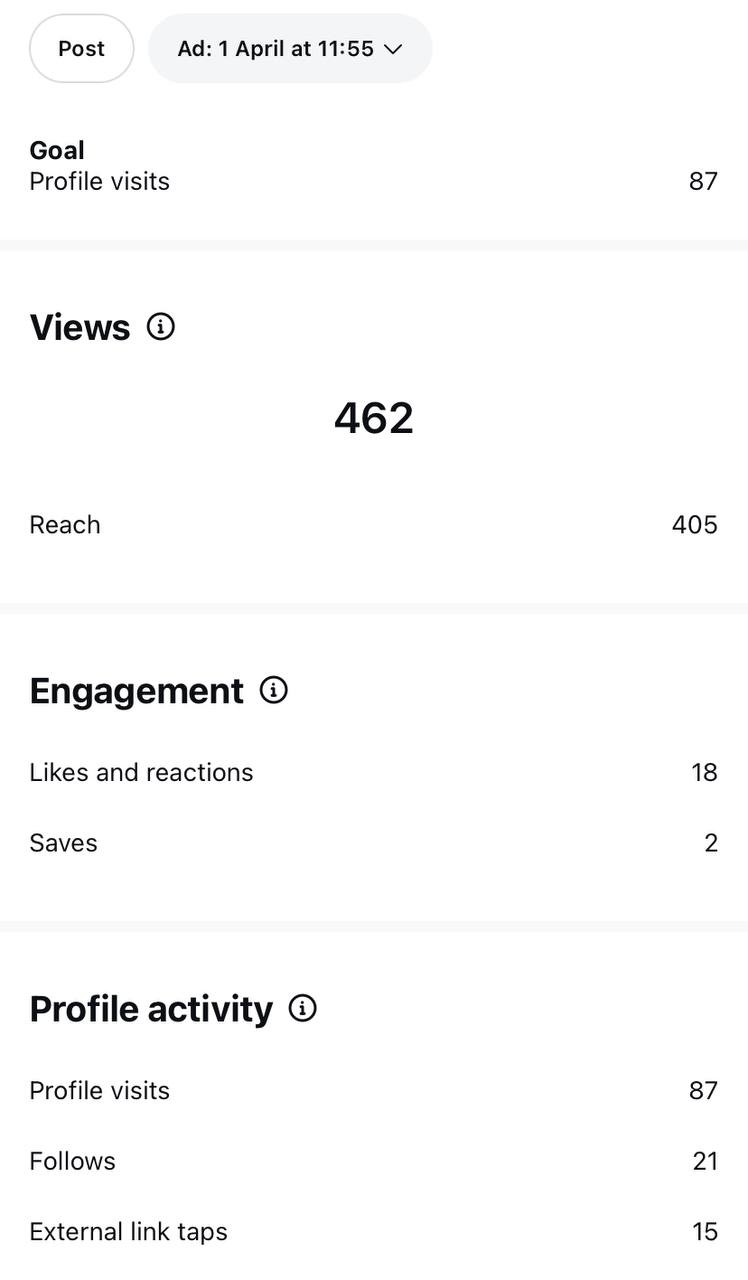
In the numbers, the picture was uneven. Some states showed clearly stronger CR, yet the launch economics as a whole came out heavier than expected. The average subscriber cost landed around $0.51, which sits well above our target zone. We saw strong local signals in places like Florida and Texas, yet systemically the setup did not resolve into a scalable model under the planned CPF.
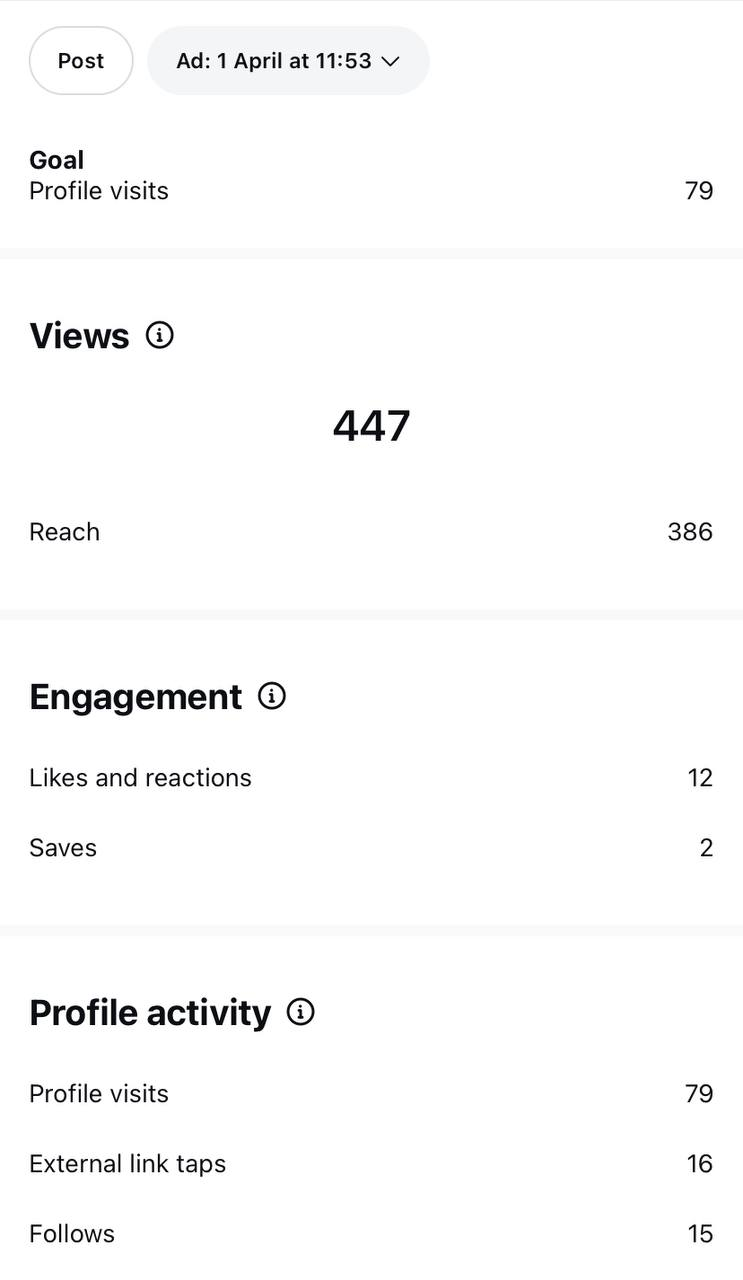
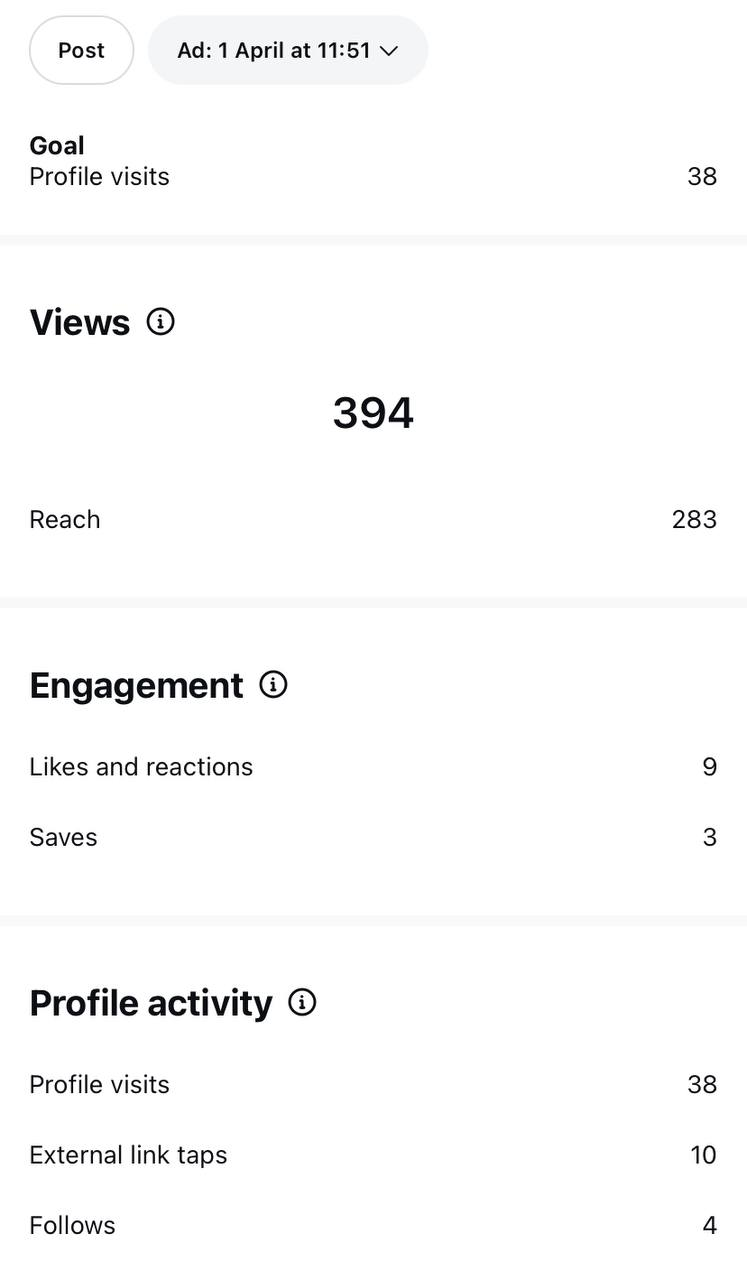
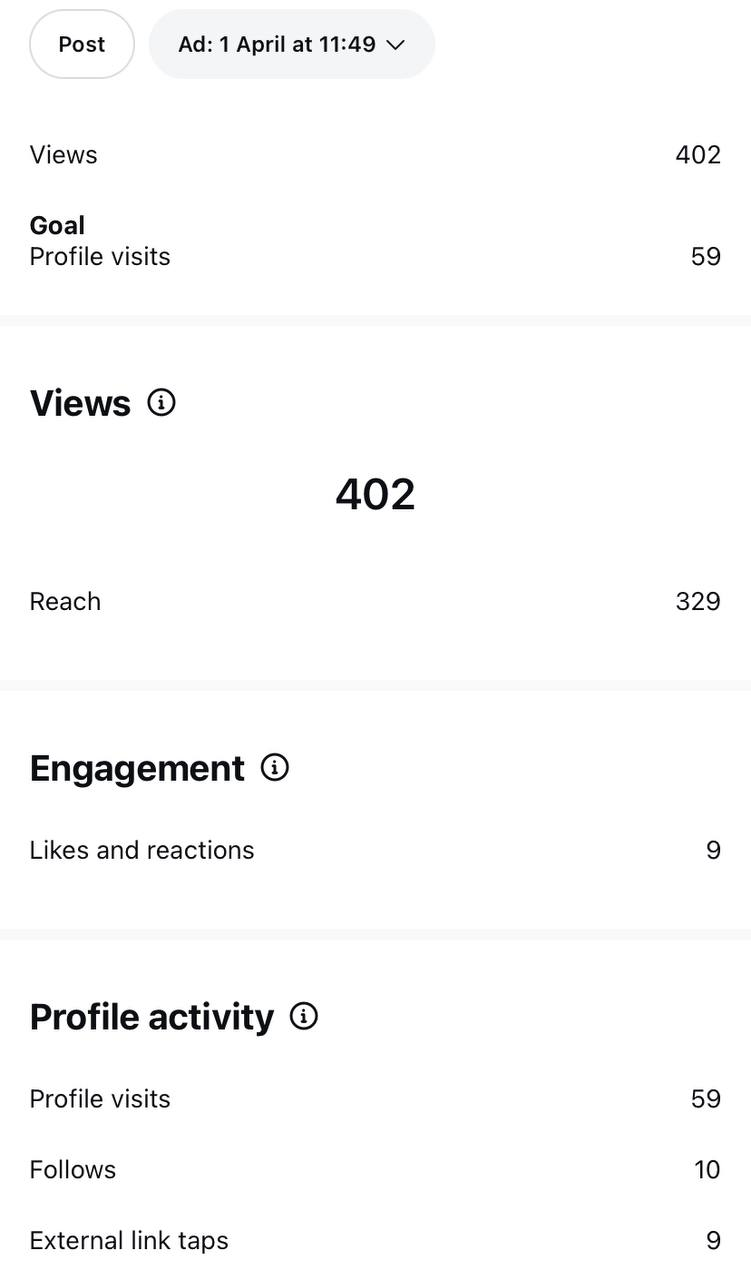
The key conclusion here concerned auction mechanics. Once the audience was split down to individual states, we narrowed the optimisation field available to the algorithm. The local weak spots followed from that restriction. It reduced the stability of delivery inside the LaL and increased the risk of repeated impressions being served to the same people. As a result, CPM could look more attractive while subscription conversion weakened.
This is what all 7 screenshots looked like in the consolidated state-level analytics:
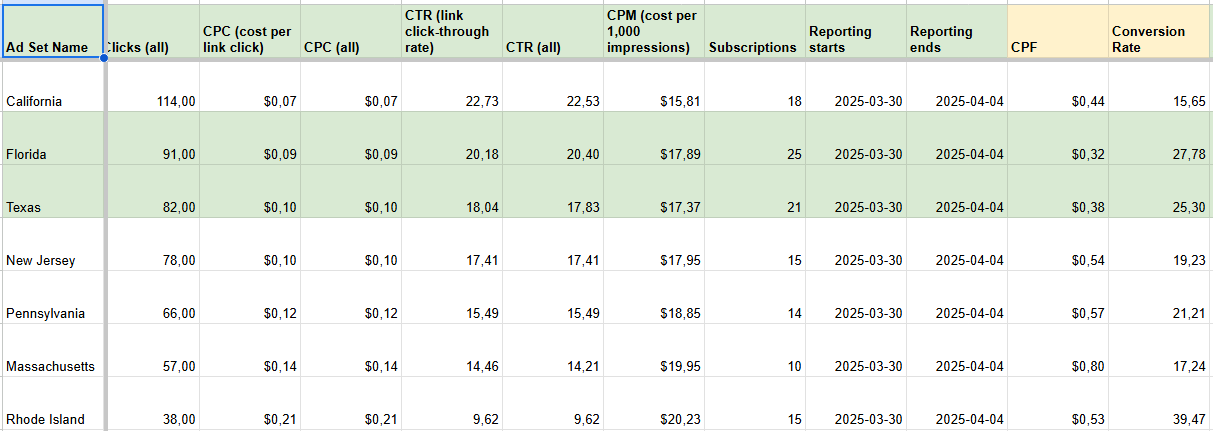
As you can see, Florida and Texas still look quite presentable.
At the same time, we added another layer to the working “whale” model. In this segment, people do buy erotic content. Then the value begins to shift toward a format of managed emotional closeness: attention, acceptance, and predictable contact without the social risks of real intimacy. That directly redefined the content task. It was no longer enough to answer only the question “what do we show?” A second axis became necessary: “what emotional retention scenario are we building?” and how that scenario is supported from the first ad touchpoint all the way to communication inside the paid funnel.
That is what led to the next management step: bringing part of the launches back to broader US coverage, testing LaLs built from different behavioural sources, cleaning up audience overlap, and assembling a transparent funnel of “click → action → subscription” inside one analytical logic rather than across scattered screenshots from separate tools.
In practice, that meant moving three tracks in sync:
- traffic, meaning where performance was cheaper and more stable;
- content, meaning what emotionally holds a “whale”;
- infrastructure, meaning how to see the path from impression to target action without analytical blind spots.
So this would not remain at the level of a nice idea, we fixed the role of each tool inside one system:
- Meta Business Suite as the base operational layer: asset management, overall dynamics, publishing control, and the broad project view.
- Meta Ads Manager as the buying layer: campaign setup, LaL tests, exclusions, and audience overlap control.
- Meta Ads Reports as the reporting layer: unified cuts across CPM, CTR, CPC, CPF, and CR, with hypothesis comparisons over time.
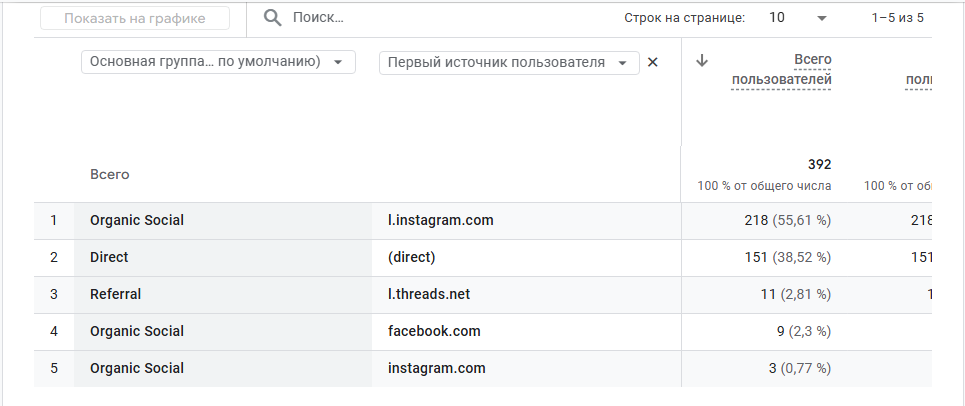
- Google Analytics as the post-click behavioural layer: what happens on the GetAllMyLinks page, which sources bring better traffic, who returns, and who reaches the target action.
This is what that looked like in Google Analytics
- Meta Pixel as the event layer: fixing key events, especially lead events, and linking the ad touchpoint to the action on the landing page.
The critical goal here was to get more than “visibility into metrics”. We needed a technically connected user path. In other words, we needed to avoid the situation where Ads Manager looks “fine” while the landing page remains opaque and the place where conversion is lost stays invisible.
A separate operational layer at this stage was synchronization with the client team around link infrastructure: UTM logic, the correct FTL link inside the Instagram landing setup, and consistent naming across campaigns and tags. Without that, the transparent funnel exists formally, while remaining analytically full of holes.
This stage marked the transition from “simply running ads” toward a more mature scaling model: one built on hypothesis discipline, behavioural logic within the segment, and verifiable analytics where every management decision can be tied back to a concrete signal in the data.
4.2. 10–16 April 2025 — LaL tests, a new subscriber-cost corridor (CPF), and content signals
Traffic and LaL test results
On the 10 April stretch, the team returned to comparing several LaL configurations for men aged 35–44 in the US in order to see where the economics were actually stable and where we were only seeing local spikes:
- Engaged Virgin — a percentage-based US lookalike built from everyone who had interacted with the account over a given period: visits, clicks, likes, comments. They may or may not have been followers; what mattered was that they had taken some kind of action.
- Engaged any Post or Ad — similar to the above, except these people did not have to visit the account itself. They could have seen a post in-feed or an ad and then left an engagement signal: a like, a comment, a reel view, or a carousel swipe. The LaL audience here meant US users similar to the people who behaved that way.
- Lead from GAML — this LaL was built from everyone who had landed on the model’s GetAllMyLinks page, where one of the buttons linked to OnlyFans. We embedded a Meta Pixel into that page, and inside Meta Events Manager we defined a click on the OnlyFans button as a Lead event. So Lead from GAML meant people who reached the GetAllMyLinks page and clicked through to OnlyFans, while the LaL meant a percentage of similar users in the US for this specific model.
- 365 days viewed “Smile Big” — the logic here was similar. There was a reel whose caption started with “Smile Big”, so that became our internal name for it. We collected the people who had watched that reel through to completion over the course of a year, treated them as a seed audience, and then built a Lookalike audience from users similar to those viewers.
In the 10 April cut, the behavioural LaL built from the Lead event — the transition into OnlyFans through GAML — delivered the best result among the behavioural segments: CR 25.35% at CPF $0.44. At the same time, the broad 1% LaL without extra behavioural narrowing showed CPF $0.33 with stable conversion, which made it the winner on entry price.
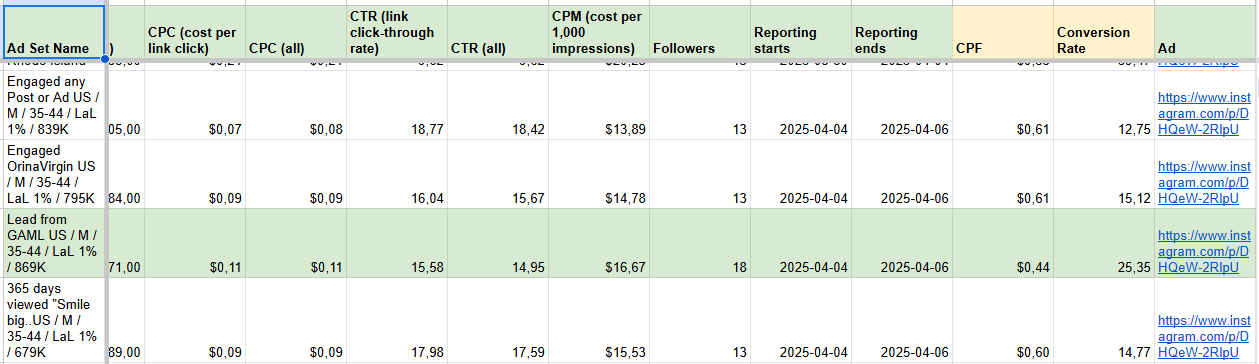
The next run and cross-check on 16 April refined the picture: the absolute peak of the period came from a campaign with CR 31.82% and CPF $0.28.

In management terms, this fixed a working corridor: across the distance, the system was reproducibly settling into CPF around $0.30–$0.50, not the earlier $0.14 target. That turned the “$0.33 vs behavioural segments” fork into a tool: broader audiences were used for cheaper and more scalable top-of-funnel acquisition, while behavioural segments became the layer for checking quality and the probability of reaching a more valuable user.
That was the logic through which we reframed the next split: not as “one more creative test”, but as an attempt to move closer to the psychographic profile of the “whale” through Meta Ads settings and LaL audiences. We kept the base intact — LaL 1% from followers, men 35–44, US — but compared how the economics changed under different meaning structures and interests.
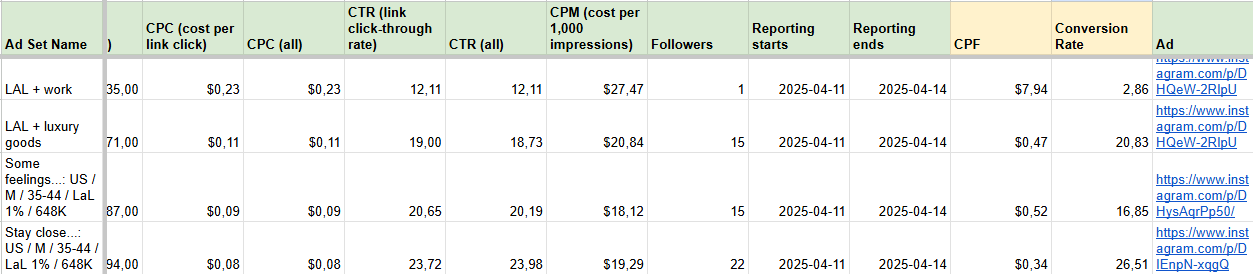
We launched four more promo posts: two with the old creative on the same base LaL audience, but with different added interest filters (Luxury Goods in one case and work / white-collar engagement in the other), plus two more on the earlier audience setup using different posts so we could isolate the effect of the creative framing itself on CPF and CR.
Across the four combinations, the result was:
- LAL + work: CPF $7.94 / CR 2.86%
- LAL + luxury goods: CPF $0.47 / CR 20.83%
- Some feelings: CPF $0.52 / CR 16.85%
- Stay close: CPF $0.34 / CR 26.51%
That cut confirmed a practical conclusion for the “reach the whale” strategy: not every “high purchasing power” interest works as a good proxy for psychography — work was the obvious failure case — whereas combinations where the message better matched the emotional scenario produced both a tolerable CPF and a strong CR, above all Stay close and LAL + luxury goods.
Content insights and ER logic
The parallel ER cut on content produced a practical priority: the best-performing formats were the ones where a sexual trigger was paired with a socially safer mode of delivery — humour, “edge” content, dialogue scenarios, and recognisable micro-plots. That confirmed that the project did not need reach alone, but a joined-up logic of “ad entry point + emotional retention scenario”.


That led to the next content step: not to increase publication volume mechanically, but to align creatives with the hypothesis about the kind of attention that actually converts into paid action. ER was not treated here as a vanity metric, but as an early indicator of which messages better prepare the audience for the direct-message and payment funnel.
Infrastructure: MBS / HowTo / SendPulse
On the infrastructure side, this period closed three tasks. The first was preparing a simplified HowTo for the agency-side staff member on the client side who handled content, so they could be connected to MBS safely without triggering early restriction risks.
The second was formalising Meta Business Suite as the single operational point for asset management and recurring analytical cuts.
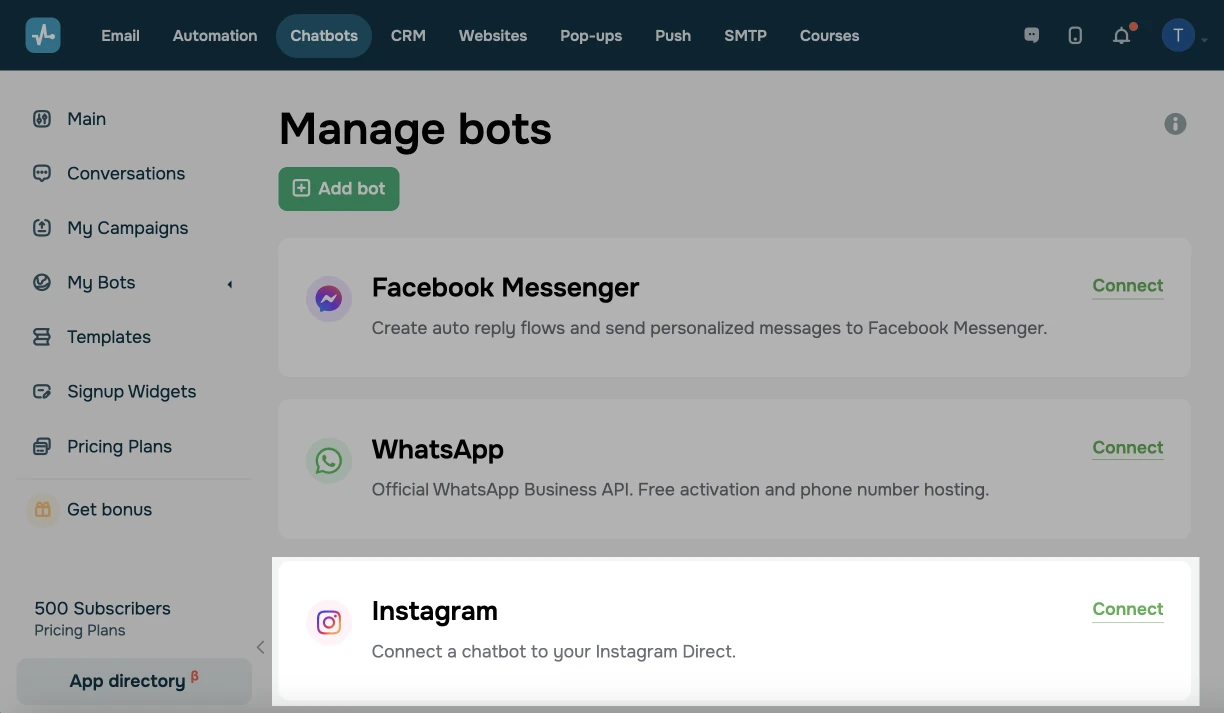
The third was launching the automation contour through the shift toward a direct-message funnel + AD ID + SendPulse. The point of that stack was to capture the ad source, manage the user’s route into Direct, and build a repeatable mechanic for the first layer of communication.
That linkage became the technical bridge between traffic acquisition and the quality of the follow-up contact: not just attracting a subscriber, but understanding which ad touchpoint brought them in and how to guide them correctly toward a scenario with a higher probability of monetization.
4.3. 22 April 2025 — validating LaL 1%, 3%, and 5%
After the 10–16 April splits, we did not reinvent the mechanics. We continued along the same line of testing through LaL, now across the 1% / 3% / 5% range. The logic was simple: not to chase a single pretty spike, but to verify where the combination held up reproducibly.
What we got in practice was a fairly clean step pattern:
- LaL 1% remained a workable base;
- LaL 3% produced the best balance of price and quality;
- LaL 5% behaved less evenly and worked worse as a reference configuration.
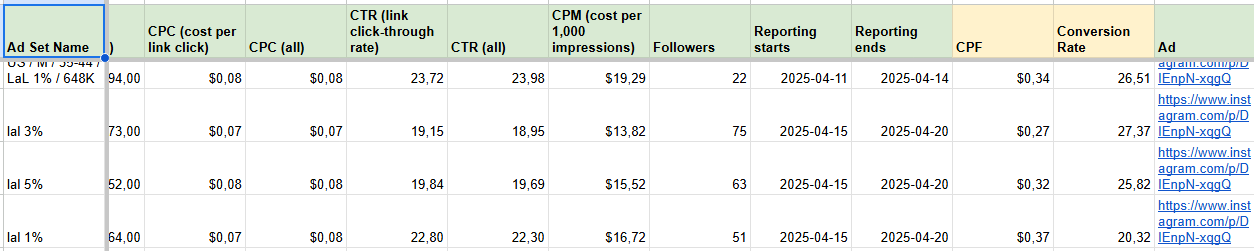
The key meaning of this step was LaL 3% as a more stable working combination in continuation of the previous launches. In management terms, that matters more than a one-off record: it gives you something repeatable to build decisions on, rather than a beautiful but fragile result tied to one date.
This is also where the logic of the working CPF corridor finally became stronger. We stopped managing the project as a chase after the dream of “forcing $0.14 at any cost” and settled into a more mature frame: maintaining reproducible economics where the metrics are not landing by accident, but repeating from iteration to iteration.
That led to a management split into two parallel lines:
- Direct follower acquisition — continue using the working LaL combinations in order to keep feeding the top of the funnel.
- Infrastructure and analytics development — strengthen tracking, the logic of the cuts, and the next step of the funnel: what happens after the follow and how that movement can be guided toward monetization.
In practice, this dissolved the false binary of “either a cheap CPF or system-building”. After the 22 April report, it became clear that the project did not need a sprint to one metric point. It needed disciplined, repeatable launches with an intelligible cause-and-effect structure.
4.4. 2 May 2025 — how we reassembled our view of subscriber cost (CPF) and audience movement
By the 2 May stage, we managed to repeat subscriber cost closer to $0.31. On that specific stretch, we got a subscriber at $0.34. This came from that same LaL 3% configuration mentioned above.

In the language of the case, it looked like this:
- earlier in the sample there was a clear outlier at $7.94 — a failed launch that sharply inflated the ordinary average;
- because of that, the arithmetic mean = $0.71 looked worse than the actual working picture;
- meanwhile, the median = $0.44, and values like $0.31, $0.32, and $0.34 began appearing more often — which made them a better reflection of the “typical” subscriber cost for a heterogeneous launch series. That is why the title carries the more honest median benchmark of $0.44 for the broader uneven series, while $0.39 is the average CPF only for the specific Followers media sample from 21 March to 26 April.
Connecting this to account dynamics: organic + paid
Alongside CPF, we assembled a monthly cut of the account’s natural movement — Follows / Unfollows — so that we would not confuse the effect of paid traffic with the profile’s baseline dynamic.
This is what it looked like, for example:
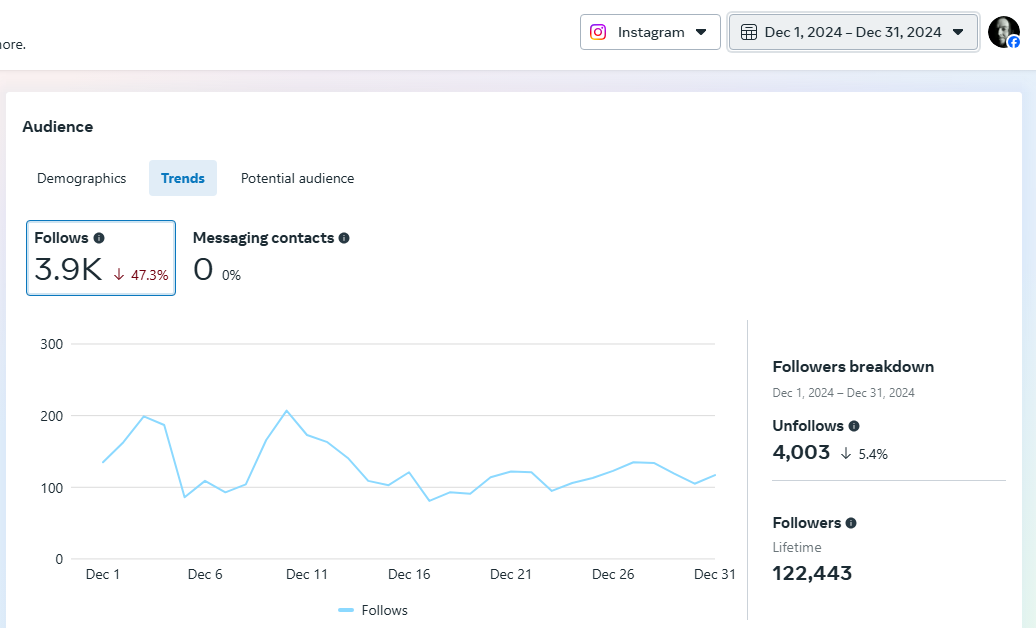
Month by month, the picture showed unevenness and seasonal distortions:
- Jul 2024: 3800 / 1452 (net +2348)
- Dec 2024: 3900 / 4003 (near-flat, -103)
- Jan 2025: 130600 / 130127 (anomalous volume, +473)
- Mar 2025: 3200 / 7314 (deep negative, -4114)
- Apr 2025: 2900 / 2741 (moderate stabilisation, +159)
And here is another view:
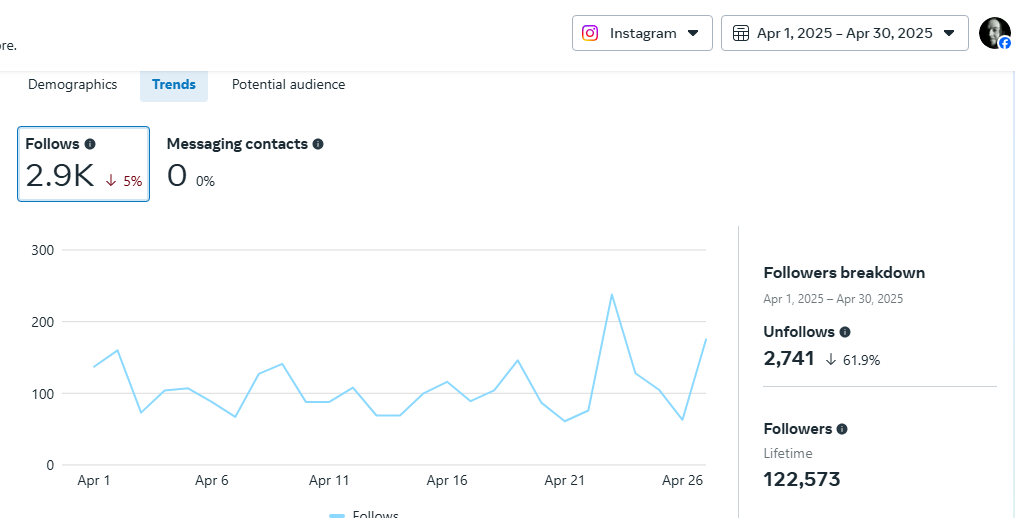
After analysing MBS Insights / Trends, it became clear that the aggregated inflow/outflow statistics show the stream itself, but not the fate of any individual follower. At that point, it was still unclear what the average lifespan of a follower on the account was, and what retention window we actually had before the transfer into OnlyFans.
That gap in understanding is what produced the Followers Retention Log — as a working research construct for observing small cohorts and estimating how quickly they thin out. In practice, it was a cohort-style observation of fresh followers through which the team was trying to feel out the real retention window inside the account’s churn.
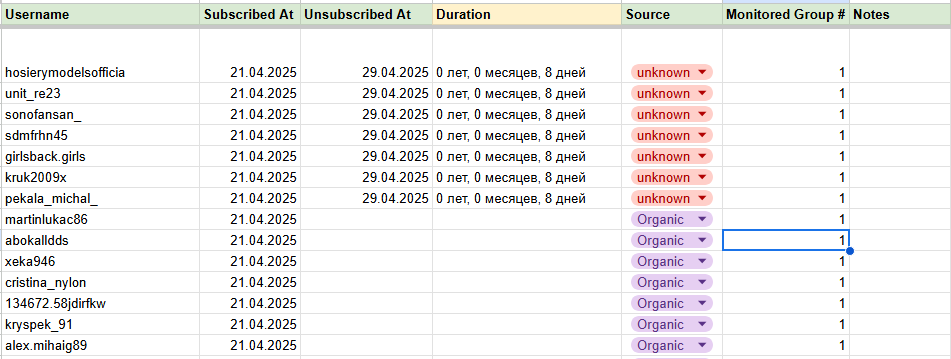
This block became methodologically important: paid traffic should not be treated as an autonomous “magic” substitute for a system. It was fixed in the role of an accelerator for the account’s baseline organic movement. In other words, paid traffic should amplify an already existing account dynamic, not mask failures in content, retention, and operational discipline.
4.5. 9 May 2025 — competitive review, DM mechanics, and the JTBD frame
At the 09.05.2025 stage, we ran a repeat competitive review and separately checked the intermediate outcome of the DM mechanics.
Repeat competitive analysis: how we reframed the meaning of short-term drops
The second account review confirmed that some of the tracked models were experiencing ER volatility and local drops. Methodologically, this matters: a short-term decline cannot automatically be read as the degradation of a specific model unless it is compared against the wider market background.
At the same time, the opposite pole was visible too: alongside the weaker periods, we also saw individual accounts with abnormally strong and, in places, quite stable ER. In other words, the picture was not “everyone is down”. It was stratified. In that sense, Virgin’s problem cannot be reduced to some universal market-wide deterioration — during the same period, there were still obvious “monsters” in terms of engagement.
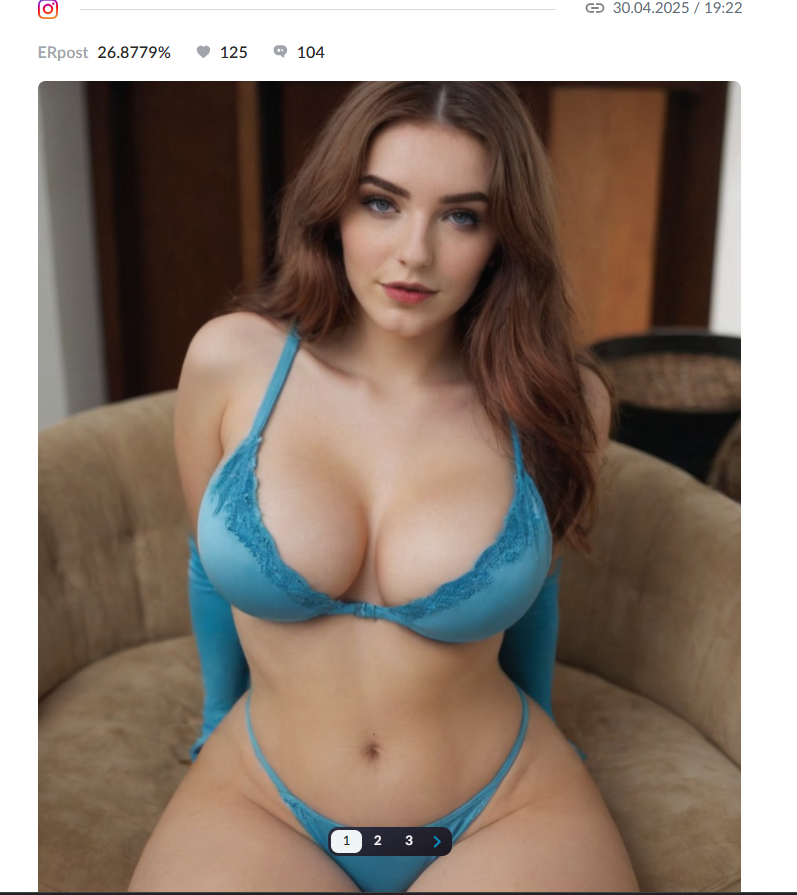
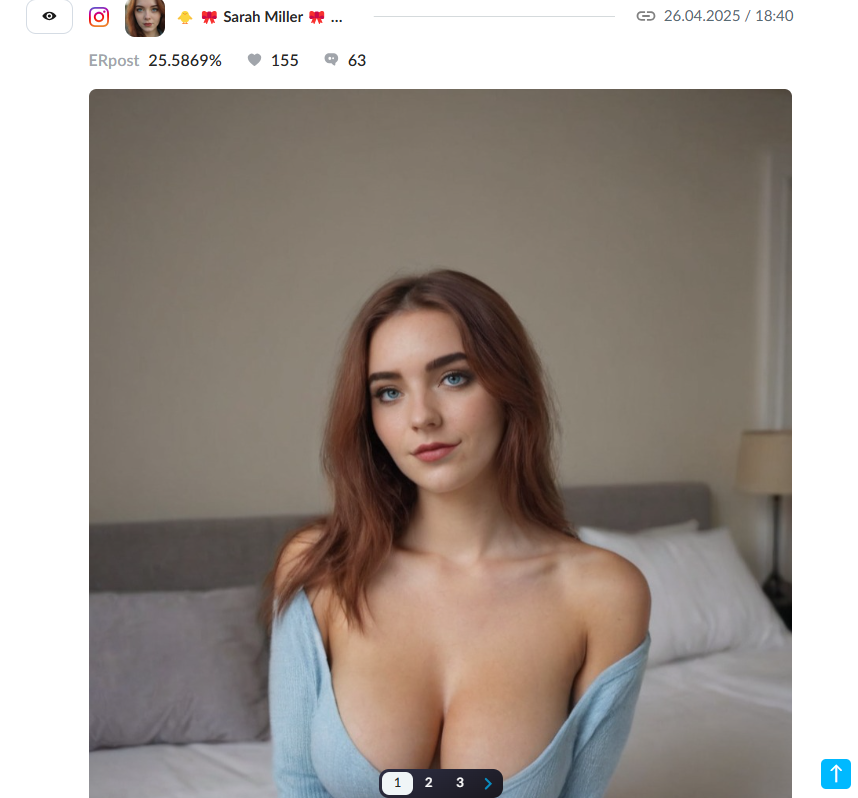
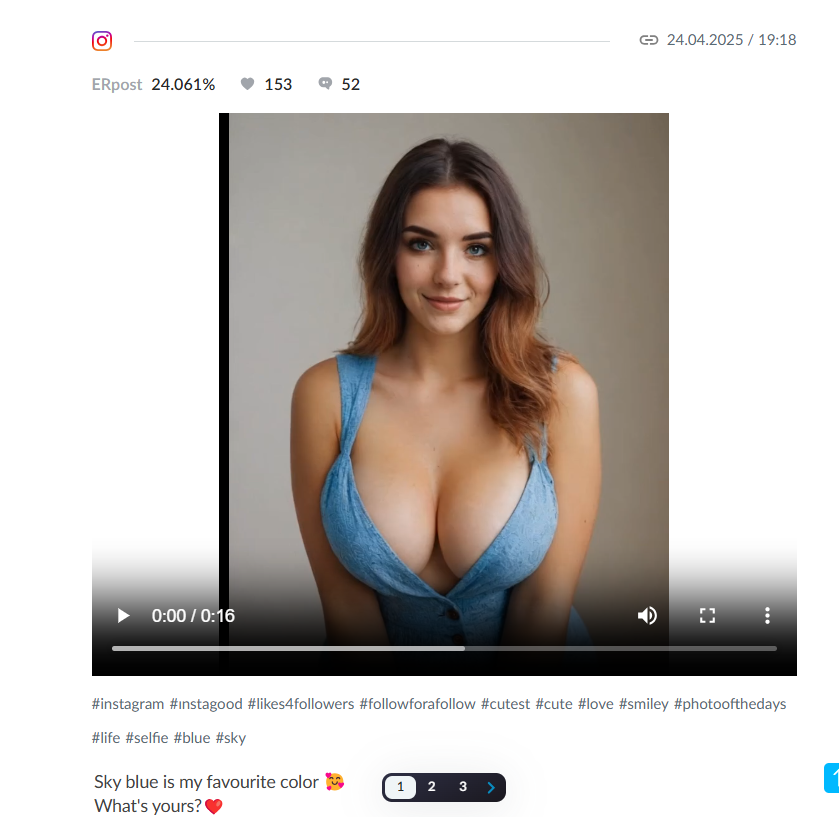
That led to a correction in interpretation: on a short horizon, drops should be treated as normal niche noise until there is proof that the decline actually breaks away from the broader comparison pattern.
DM mechanics: what the test actually showed
The messaging test produced an asymmetrical picture:
- CTR and clicks were there — the ad was capturing attention;
- the move into messages was weak — in the measured cut, DM conversion was zero;
- the main break sat between interest in the creative and readiness for a more intimate action, namely sending a message in Direct.
The practical conclusion at this stage was that the DM mechanic should not be thrown away, but it also should stop being treated as the shortest universal route. It remained in the toolbox as a separate instrument for warmed-up audiences and retargeting, rather than as the primary path for any cold touchpoint.
JTBD / overserved / underserved as the working frame for the next step
So that we would not argue in the abstract about “which creative and which approach is better”, we proposed a working segmentation frame to the client through JTBD and the overserved / underserved logic — purely as a tool for the next iterations.
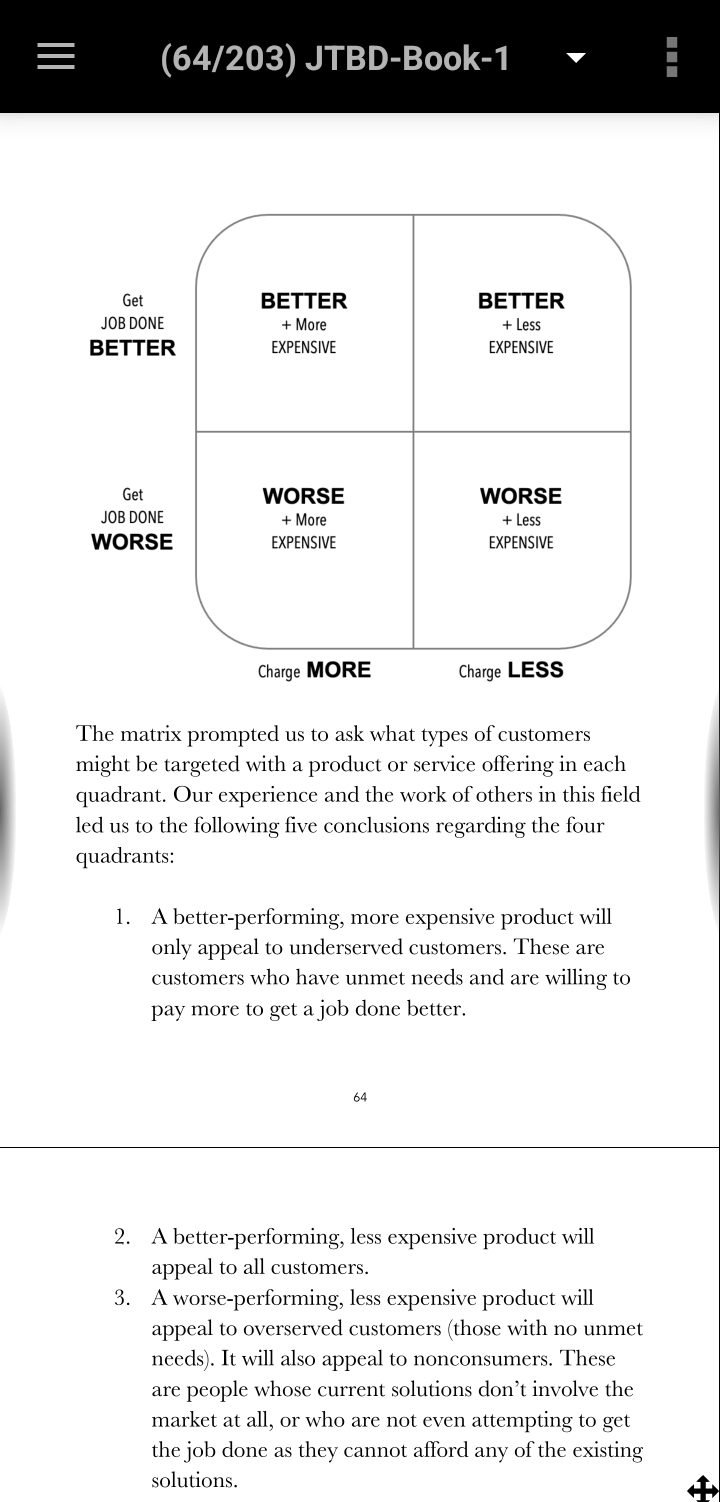
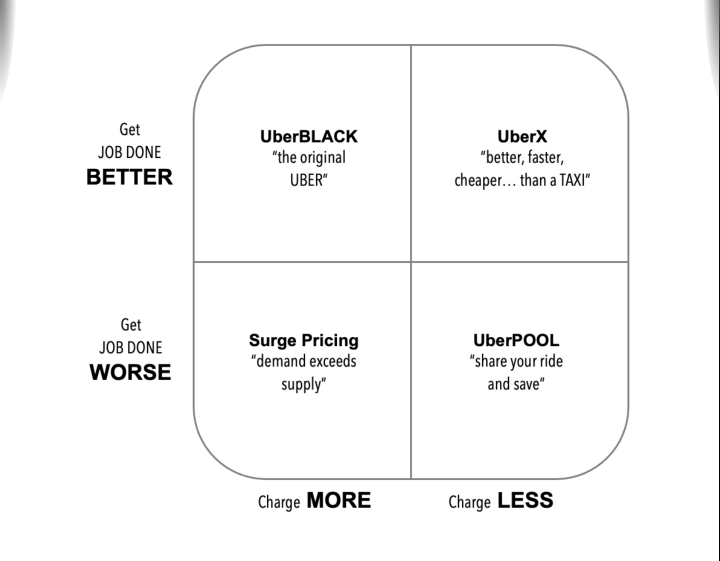
In practice, this was needed in order to break the audience down by value type:
- mass users — a stable base volume, sensitive to price and frequency;
- potential whales — users with high willingness to pay for personalised value;
- free-riders — high engagement without a move into paid behaviour;
- disappointed users — fast churn caused by a mismatch between expectations and the actual experience.
The next task was no longer to average everyone into one funnel, but to build separate hypotheses for touchpoint, offer, and monetization path for each type.
Of course, whales remain the priority. It is simply worth remembering, while we are aiming at them, that there are other possible routes to payback too.
5. Results
Funnel Snapshot
- Ad launches: 27
- Spent on traffic: $293.25
- Followers acquired: 760
- Ad link clicks: 3,459
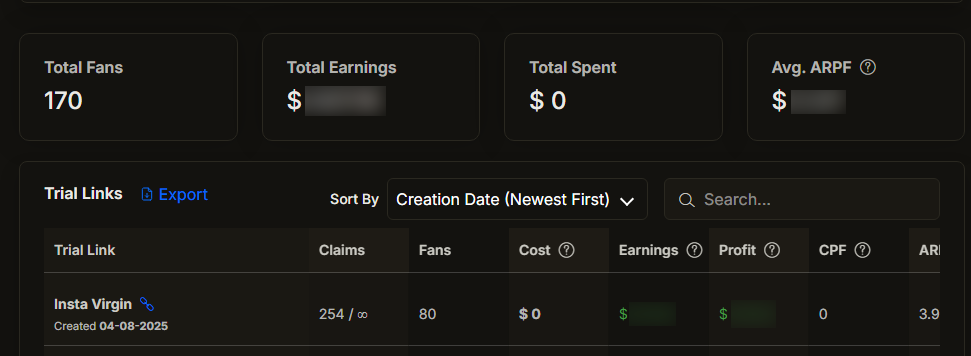
- Transitions from Instagram to OnlyFans according to GA: 568
- Lead events recorded by Meta Pixel: 1,255
- Fans recorded by OnlyMonster in weekly slices: 272
- Median CPF across the full launch series: $0.44
- Average follow conversion rate: 22.86%
- Median follow conversion rate: 21.98%
- Average cost per click (CPC): $0.10
- Median cost per click: $0.09
It is important that these numbers belong to different layers of the funnel and different measurement contours. 3,459 refers to upper-funnel clicks from the Followers media plan. 568 refers to transitions from Instagram into OnlyFans according to GA (Google Analytics), assembled in the separate “large-volume funnel”.
This is what that table looked like:
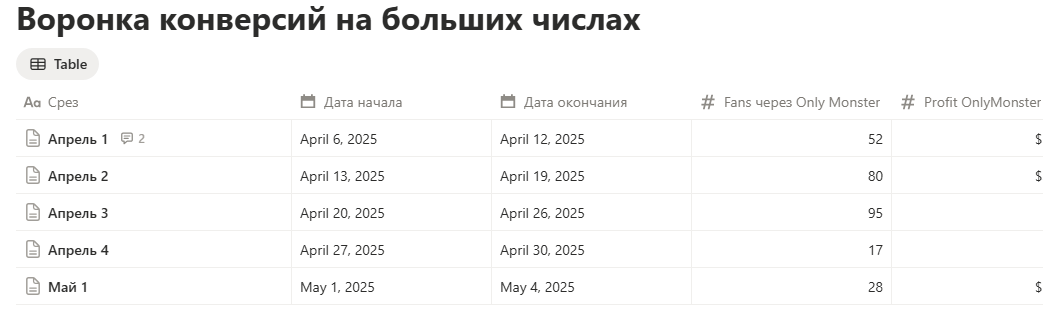
And here is a little more of it:
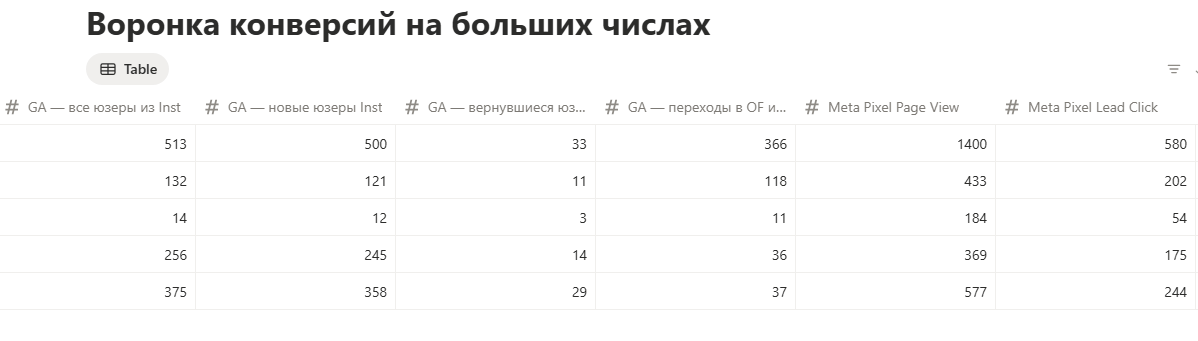
And we pulled the data from Google Analytics, for example like this:
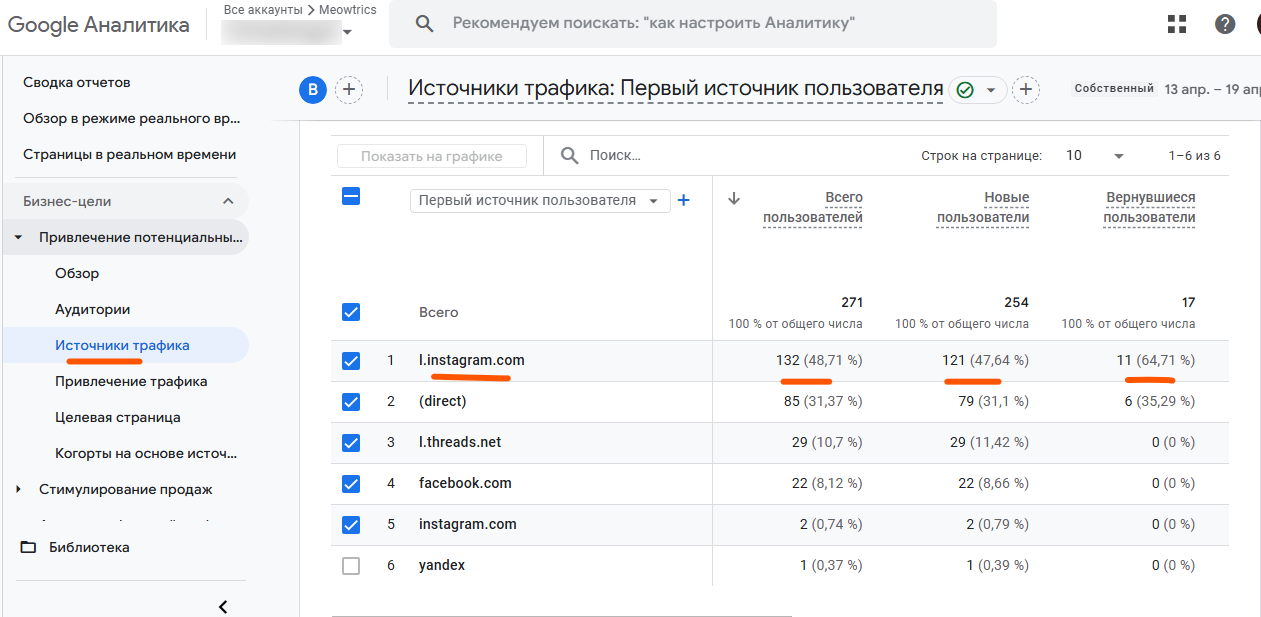
And from Meta Pixel like this:
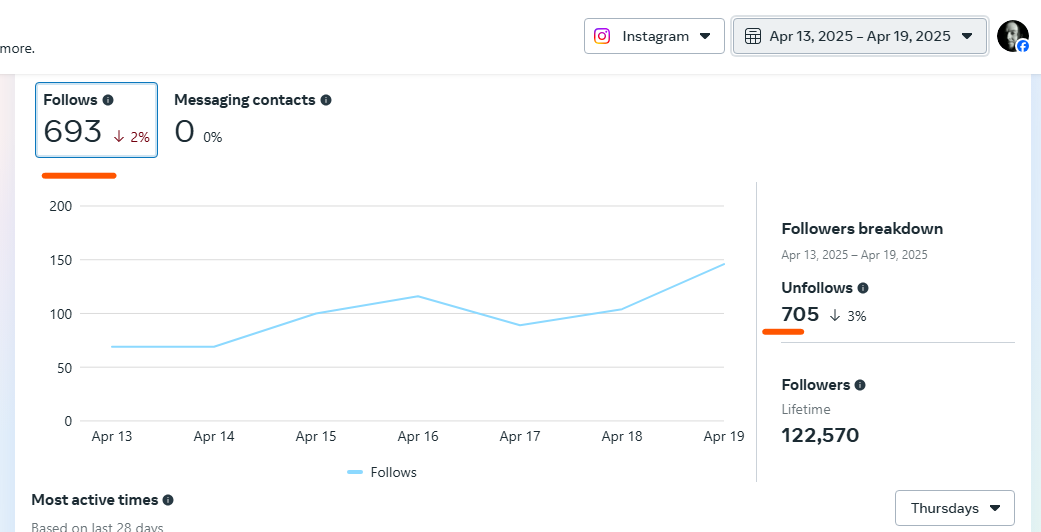
And from the tracked OnlyMonster link:
What the Traffic Showed
Over the course of the work, the target KPI of CPF at $0.07–$0.14 never became a stable operating mode. That needs to be stated plainly. At the same time, the results were not random: a repeatable traffic profile began to emerge, and that profile could already be used as a management reference point.
In the data, it looked like this:
- at the start, certain creative × segment combinations were already producing a better signal than the background;
- the local peak landed at CPF $0.28 with CR 31.82%, but that result never became the base mode;
- across the launch series, the working points $0.31, $0.32, and $0.34 kept repeating;
- the practical CPF execution corridor settled into the $0.30–$0.50 range.
The conclusion from the traffic block is straightforward: the original ideal did not hold, but the project did produce repeatability and a clear operating zone for the next iterations.
Audience Segmentation
The segmentation moved from a broad hypothesis toward a working profile. At first, broader sets were tested so that reach would not be narrowed too early. Then the focus shifted toward older clusters based on the actual metrics: subscriber cost, conversion, and repeatability of result across repeated launches.
In practical terms, the project moved:
- from a broad target toward a 35–44 priority;
- then toward a working extension into 35–54, once it became clear that the signal did not stop at a narrower window;
- and toward a more white-collar profile as the pattern with stronger payment behaviour inside this monetization model.
This is a conclusion from the data, not a hypothesis: in those age and behavioural clusters, CPF and post-click behaviour were converging more consistently. In younger and broader segments, noise appeared more often without a stable LTV trace.
Infrastructure and Analytics
By the middle of the cycle, a measurable operating stack had been assembled that linked acquisition, analytics, and retention into one system:
- the Meta asset architecture was built with a separation between the asset container and the working ad zone;
- the acquisition and reporting contour was established across MBS, Ads Manager, and Ads Reports;
- post-click event tracking was added through Pixel on GAML and GA;
- the funnel was checked on large numbers rather than one-off cases;
- a Retention Log was introduced as a separate observation layer for retention;
- the first DM-oriented mechanics through SendPulse and AD ID were fixed as a future channel for communication tuning.
Decisions stopped being made by feel alone: it became possible to see not only the cost of entering the funnel, but also the quality of the user’s path beyond that point.
Niche and Monetization
The project confirmed that a mass-subscriber strategy lives inside one economic logic, while a high-value-segment strategy works through another model of payback. That is why the two cannot be collapsed into one success metric.
- A mass subscriber adds volume at the upper layer of the funnel, but does not guarantee deep revenue.
- A high-value user may be more expensive on entry, but repays through the depth of the payment scenario.
- Final value depends on the interaction scenario, including repeat payment behaviour.
- That is why the focus shifted toward the retention / LTV path rather than minimum CPF as an end in itself.
Traffic began to be treated as part of the overall monetization model. First, volume and entry cost matter. After that, retention and subsequent monetization become critical.
Closing Frame for This Section
The project’s results are supported by data: the system became more mature than it was at the start, repeatability appeared in traffic, working segmentation emerged, and a measurable decision-making contour took shape. At the same time, the pace of improvement did not match the original expectation around speed of reaching the target CPF, and the project ended before the next layer of systematic retention / LTV tuning could fully unfold.
6. Hypotheses That Did Not Hold
At this point, one methodological clarification matters.
Back then, we were not yet running hypotheses through the ICE framework in its current form. The internal database was built as a working layer on top of SMART logic: a hypothesis received the status Defeated when it failed to confirm the original measurable target or failed to deliver the expected improvement in the metric. That is why the historical status in the database does not always match the final editorial assessment in this case.
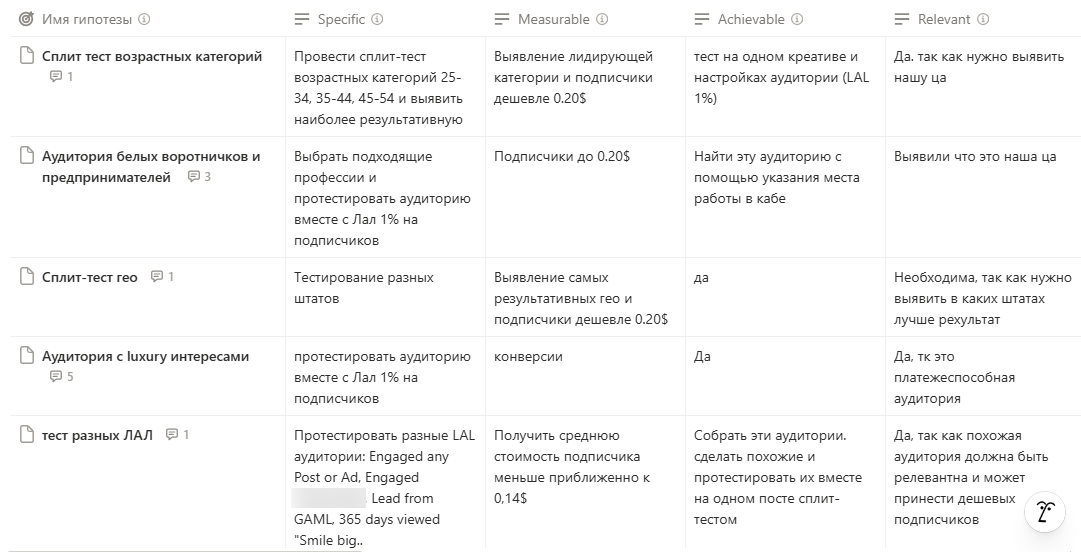
That is also where the important clarification about the age split comes in. Formally, it ended up in that database as well, but not because it was useless. On the contrary, it helped identify a strong age segment. It received the Defeated status for a different reason: the test did not reach the target CPF around $0.14.

That is why, in the final logic of this case, we do not classify the age split as one of the failed hypotheses. It produced a useful segmentation result, but it did not satisfy the formal KPI frame that the older database was built around.
In this section, we therefore fix only the three hypotheses that truly failed to confirm in testing.
6.1. “LAL + work” did not hold as a proxy
In one of the splits, the LAL + work combination produced an abnormally heavy subscriber cost — CPF $7.94. This is fixed here as the result of a specific configuration that was later removed from the working set.
6.2. Direct / DM did not hold as the “short route”
The direct-message mechanic produced an asymmetry: the ad attracted attention through a strong CTR, but that interest did not convert into messages, with DM conversion at zero in the measured cut.
The conclusion was that the problem did not lie in the fact of interest in the creative, but in the transition between stages of the funnel. That is why DM was left in the toolkit for warmed-up scenarios rather than treated as a universal first step.
6.3. The state split did not hold as a scalable foundation
The geo split across individual states produced local signals in specific points, but it did not resolve into a stable scalable model.
At the level of the hypothesis, the opposite effectively became visible: excessive fragmentation may have been narrowing the algorithm’s optimisation field and reducing the overall stability of conversion.
7. Conclusions
Case Summary
As shown above, across 27 Meta launches the project generated 760 followers at a total spend of $293.25, while the most honest benchmark for the full series remained the median CPF of $0.44. But after the very first tests, this stopped being a story simply about follower acquisition and turned into an investigation into how to build a transparent, economically meaningful funnel toward the high-value segment.
Subscriber Cost Cannot Be the Only Truth
This case forced us out of the naive idea that the adult niche can be honestly measured by subscriber cost alone. Formally, the starting CPF KPI stayed in front of us until the very end, and we never discarded it as a reference point. But the reality of the project kept pushing us toward a different conclusion: in an adult scenario, a cheap subscriber does not guarantee anything by itself.
If the model’s economics are driven mainly by mass subscribers, entry price explains a great deal. In our case, the high-value segment mattered far more. That is why entry cost stopped being self-sufficient as a truth claim. What moves to the foreground is a three-part linkage:
- who exactly we are bringing in,
- how long that person remains inside the account,
- and how their path toward monetization actually unfolds.
From that point on, CPF remained an important metric, but it stopped being the only court of judgment over the whole system.
There Are Different Growth Regimes in This Niche
This case highlighted once again that different growth regimes coexist inside this space.
The first regime is built around fast farming: volume, repeated combinations, blunt budget scaling, buying already-grown entities, and working off visible outcomes without a deep analytical layer. That route can produce a fast visual effect. But it breaks down less cleanly into controllable causes and more often answers only one question: “How much did we pour in?”
The second regime is built around systematic growth work: infrastructure, analytics, segmentation, content hypotheses, retention, and the search for leverage points. Volume still matters here, but it is not the only thing that matters. This path takes longer to unfold and demands more discipline on the way in. What it offers in return is the possibility of a transparent, reproducible model of growth.
Inside the Virgin case, we were working in the second mode.
What This Project Made Clear
Even in interrupted form, the project still showed that this kind of approach can produce a real structural frame: a workable traffic corridor, more precise segmentation, a mature Meta setup, more connected analytics, and a more honest view of the high-value audience. We saw which hypotheses held, which collapsed, which signals were only superficially attractive, and which ones could actually serve as a base for the next iteration.
The same case also exposed the boundary of the method. Systematic work moves at its own rhythm – it reveals its potential more slowly at the start and requires patience not only from the team, but from the project itself. In Virgin’s case, that rhythm did not match the horizon of expectations. As the ethical preface already made clear: if the goal is income without building a brand seriously and for the long term, then our system-heavy approach becomes excessive.
At this point, a reader may be tempted by two overly simple interpretations.
The first: the client and the model overestimated the market, clung naively to the idea of a $0.14 CPF, and expected the impossible.
The second: we arrived with a system-heavy approach in a niche that actually needed something rougher, faster, and more grounded, and ended up unintentionally sabotaging the task.
Both interpretations are too cheap for reality.
There is an old Dr. Cox line from Scrubs that fits here: “If you took all the porn off the internet, there’d only be one website left, and it would be called ‘Bring Back the Porn.’”

In the adult niche, that joke is practically a diagnosis. This market rests on a demand that is ancient, resilient, and vast. It is not built on a passing trend or on an artificially manufactured need. Its foundation lies in basic human tensions: fantasy, deprivation, intimacy triggers, the desire for control, comfort, validation, sexual response, and parasocial attachment. This demand does not need to be carefully cultivated from scratch. It already exists. It is already pulsing. It is already looking for form.
That is exactly why the farming strategy is not absurd, and does not exist by accident. The niche itself allows it to exist.
The market is too broad, the threshold of entry into the basic mechanics of supply is too low, and there is too much natural raw material for monetization, to put it bluntly. In economic terms, almost any woman or man is born with a baseline capital endowment for adult. Add one smartphone and two media platforms – one subscription platform and one acquisition platform – and the “MVP product” already exists.
What other niches require months of trust-building, content, reputation, and careful packaging to achieve can start responding here at the level of the most basic presentation. That is why the client, when looking at a low CPF as a realistic target, was neither foolish nor detached from the market. If anything, the opposite is true: they were reading the niche the way practitioners often read it when they know that farming works in adult simply because the market forgives a great deal.
Just think about the scale. There are about 8.3 billion people on the planet. Divide that roughly in half, and the Total Addressable Market (TAM) becomes 4.15 billion potential consumers.
A more concrete expression of how vivid that demand is can be seen in Pornhub traffic statistics for March 2026, the most current benchmark available at the time this case was written:
- 4.26 billion visits.
- Roughly 137–140 million visits per day (4.26 billion ÷ 31 days).
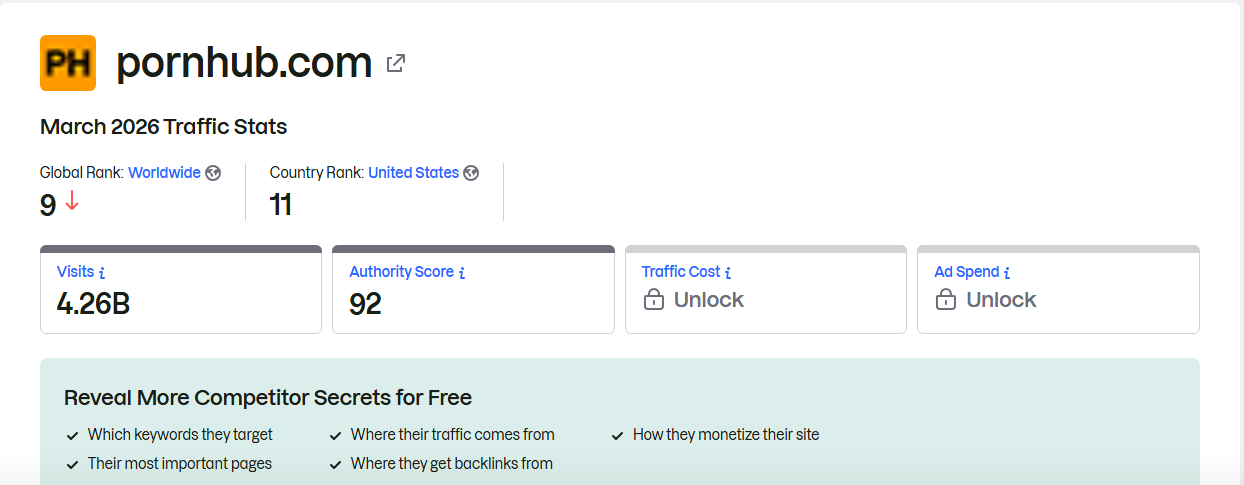
Source: https://www.semrush.com/website/pornhub.com/overview/
In a large number of ordinary niches, you can build a strong offer, arrive in social media, invest real effort, and still end up with zero. In adult, a total-zero scenario feels almost unnatural if the model is publishing content, matching basic demand patterns, and remaining present inside the flow of attention at all. The spread between models is enormous, and the distance to the very top – figures like Sophie Rain – is vast, yet the demand substrate itself is so alive that it supports even crude, opaque, and only partially understood strategies. That is the strength of farming. It is also where its danger lies.
Because a farming strategy rests first on a presumption of workability. Explanations often arrive later or are never fixed at all. It gets repeated because “on average, it works.” It scales through spend, through volume, through repeated entities, through pressure on the market, through buying already-grown assets. But inside that logic, it is often much harder to see where the real lever actually sits. Was it the model, the visual, the timing, the audience, the type of deprivation, the specific emotion, the depth of the parasocial signal, the content frequency, the transfer quality, the consumer’s habit loop? Farming often does not answer that. Its operational logic is: if it moves, keep pushing it.
That was exactly where the boundary of our method sat.
We did not reject the starting KPI and tell the client, “you do not understand the market, but we do.” On the contrary, we kept that target in view until the very end because the market could, in principle, have opened a path toward that kind of CPF. We had no right to declare the goal meaningless in advance. At the same time, we were trying to do something that farming logic usually does not do: build a system that would either bring us to that price, or allow us to show honestly that entry price itself is secondary here compared with a more important reality – the ability to bring in economically meaningful users and to see the cause-and-effect link between traffic and money.
Put simply, we were working toward two possible outcomes. The first was a cheap subscriber. The second was a stronger truth: that even a more expensive entry point makes sense when it brings in not a random crowd, but the people who actually shape the model’s economics.
That is why the divergence in the Virgin case should be read without cheap moralising:
- the client’s logic was not stupid;
- our logic was not detached from the market.
One side was leaning on the real strength of the niche and expecting a farming effect. That expectation was rational, because broad and stable demand really can produce results. The other side was trying to turn that same strength of demand into a transparent, cause-linked, manageable system. Those are different speeds, different forms of confidence, and different growth regimes. In this case, they simply did not have time to converge in one place.
That is why the work stopped before the next layer – retention, the lower funnel, and a tighter link between traffic and monetization – had time to fully unfold.
Why This Case Still Matters
This is a case about maturing one’s lens.
It made several things clearer:
- how to assemble Meta infrastructure in a sensitive niche;
- how to connect traffic work with “whale” logic.
That is why this case matters beyond one specific model. It became part of our practical methodology for adult projects – a space where chaos, shame, fast money, and the illusion of simple solutions too often block the path to systematic work.
And in a closed environment, we were also left with this very human trace: the client understood that we genuinely knew what we were doing. They simply needed farming.

8. Credits
This case was assembled and published by The Quiet Orbit as part of our open methodology for working with adult projects.
Special thanks to Meowtrics for the task, for trusting our work, and for being willing to discuss the niche at the level of the model’s real economics rather than only surface metrics.
To verify your review, you can go here:
Here’s their website: https://meowtrics.com/
Alternatively, this is the account they used to contact us first: https://t.me/MeowtricsTeam