This Live POC
Five short choices in one clear sequence.
- Choice
- Choice
- Choice
- Choice
- Handoff

Only some visitors reach the paid link ready to act. Standard link analytics can record the click, but not what the visitor chose or responded to before it.
Adult Creator Engagement Funnel adds a small, measurable interaction between public attention and the monetization path.
Most creator routes use the same short sequence.
This sequence serves people who are ready to act. For everyone else, it reveals very little: they may be curious, hesitant, interested in another offer, or not ready to commit.
A low-commitment action before the paid page can show what a visitor responds to.
These public routes were reviewed in June 2026. Each follows the same visible sequence: profile, story link, link hub.
Choose creator
Choose route step
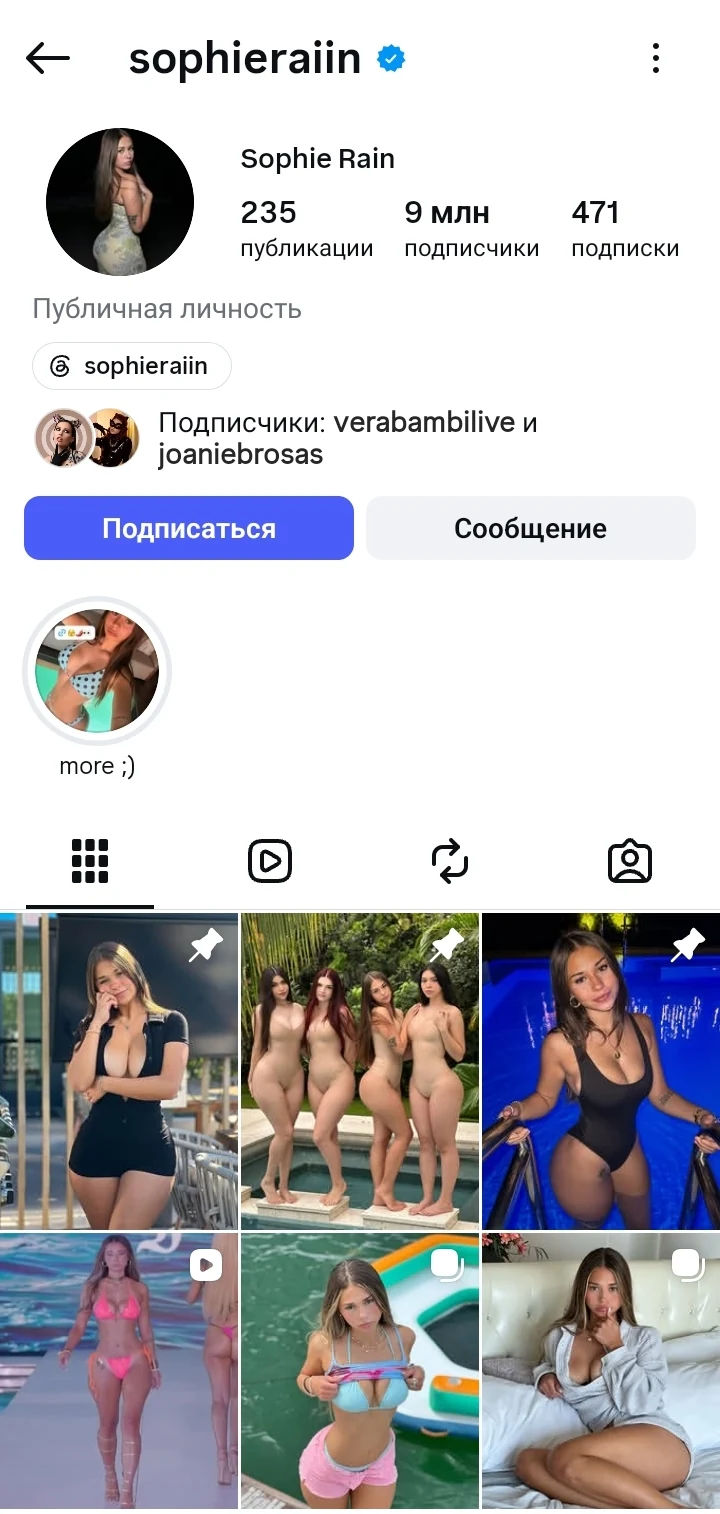

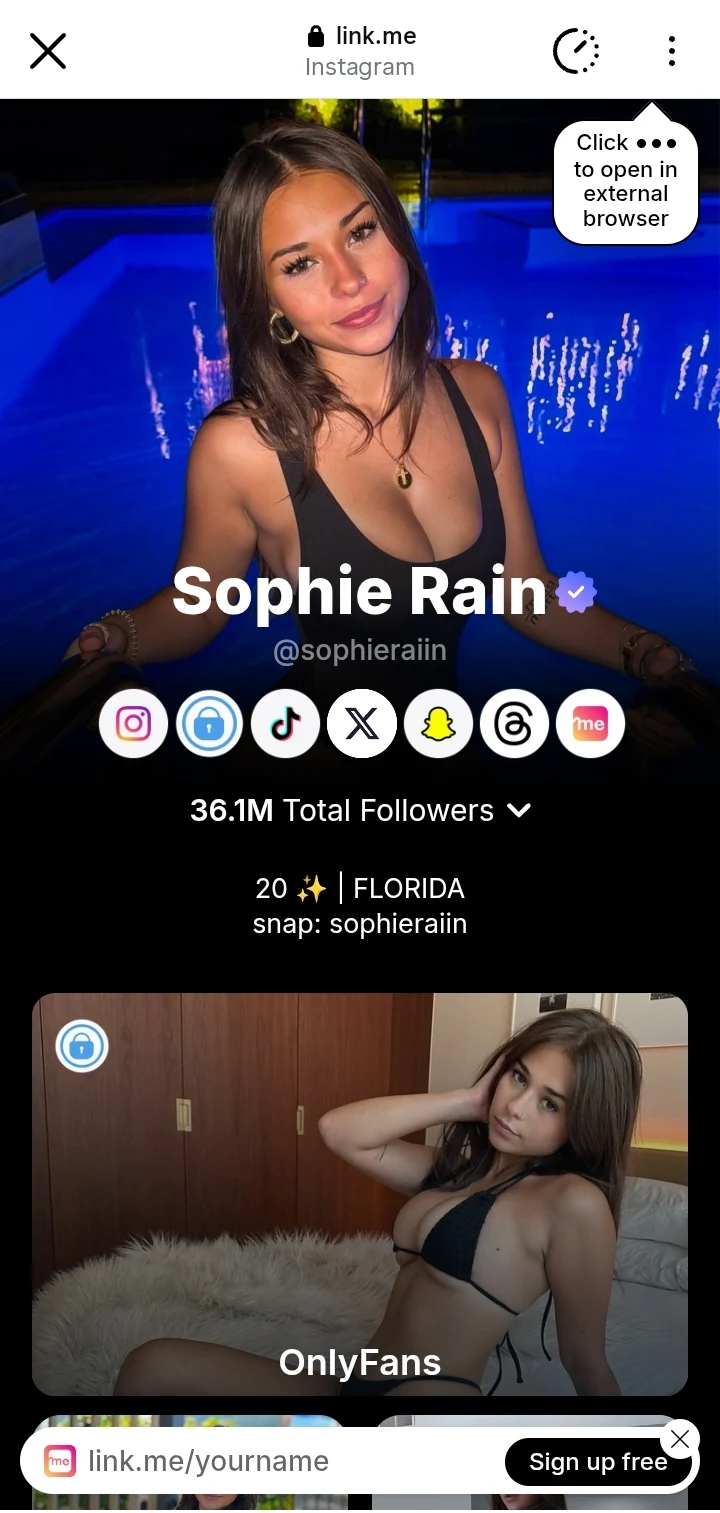
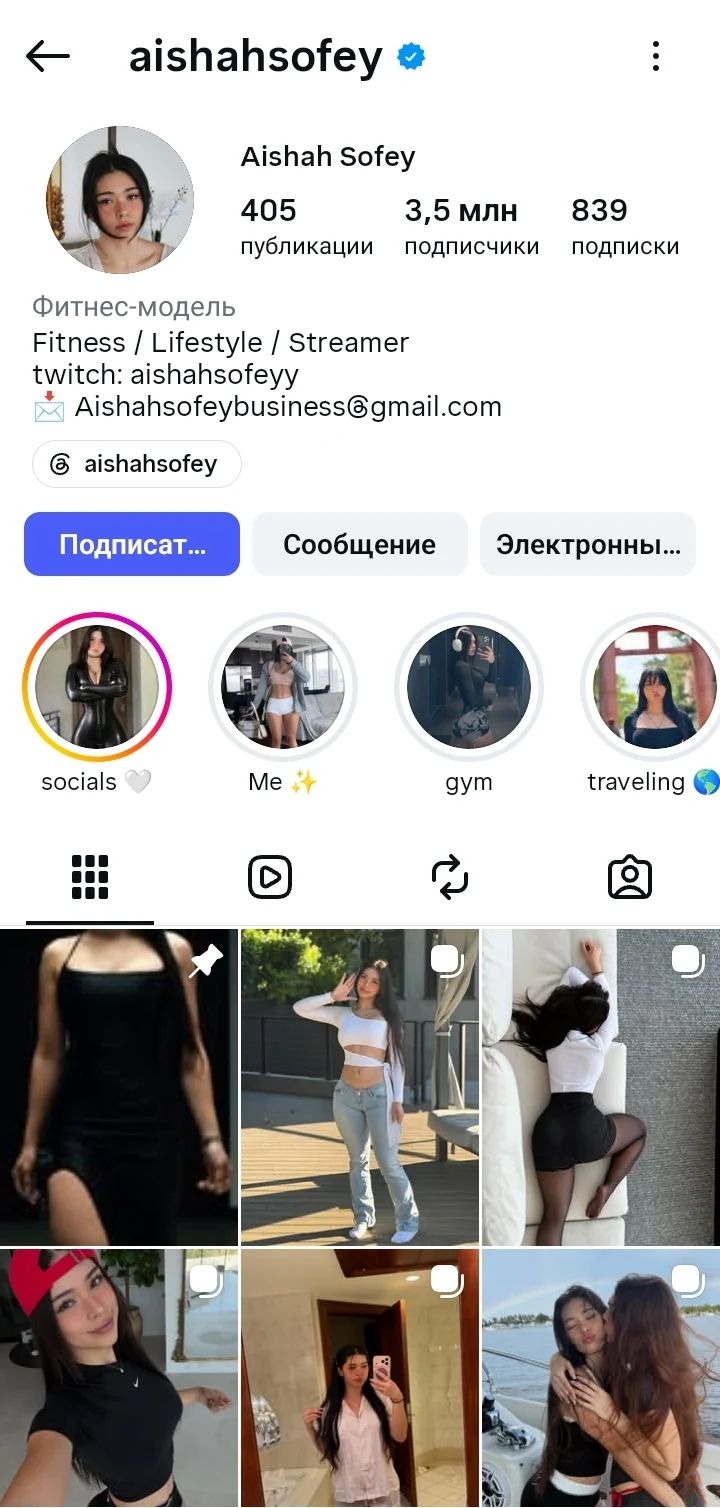

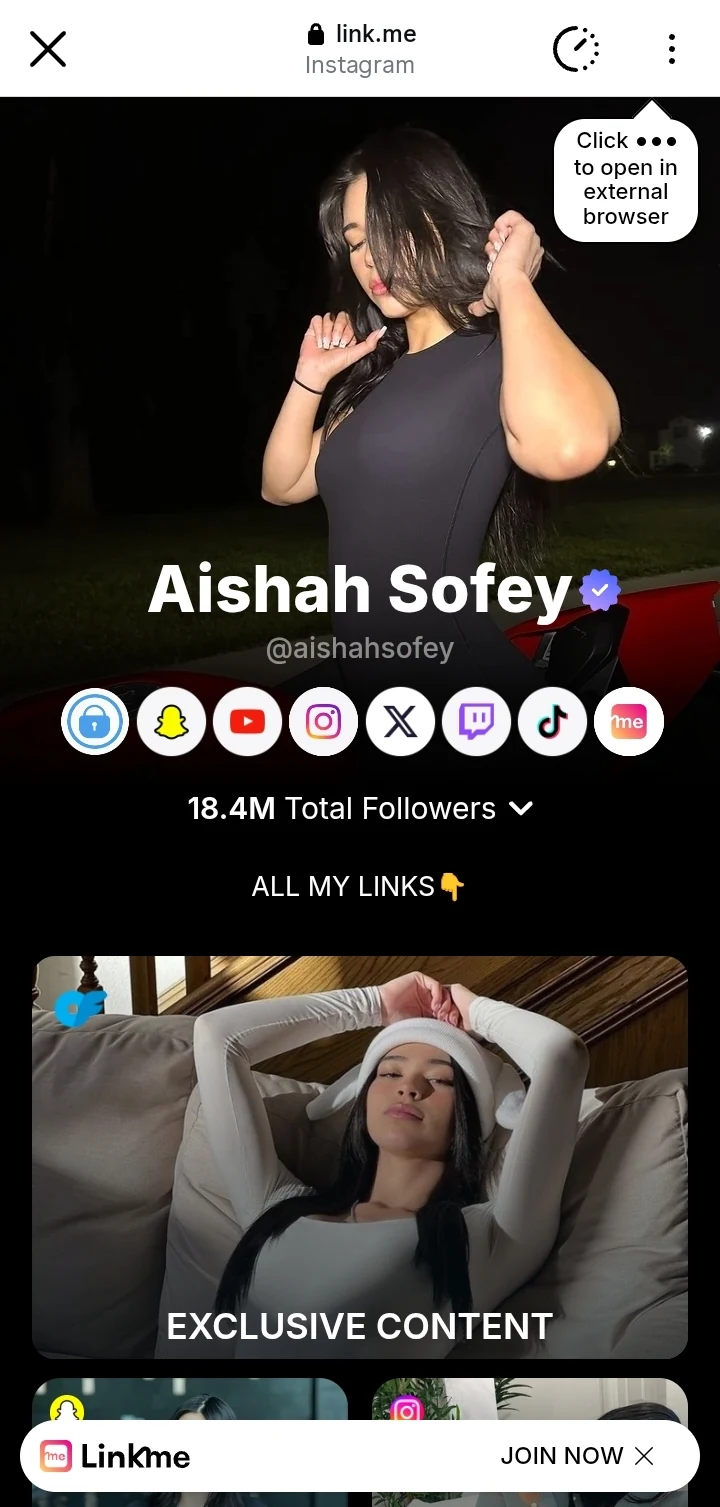
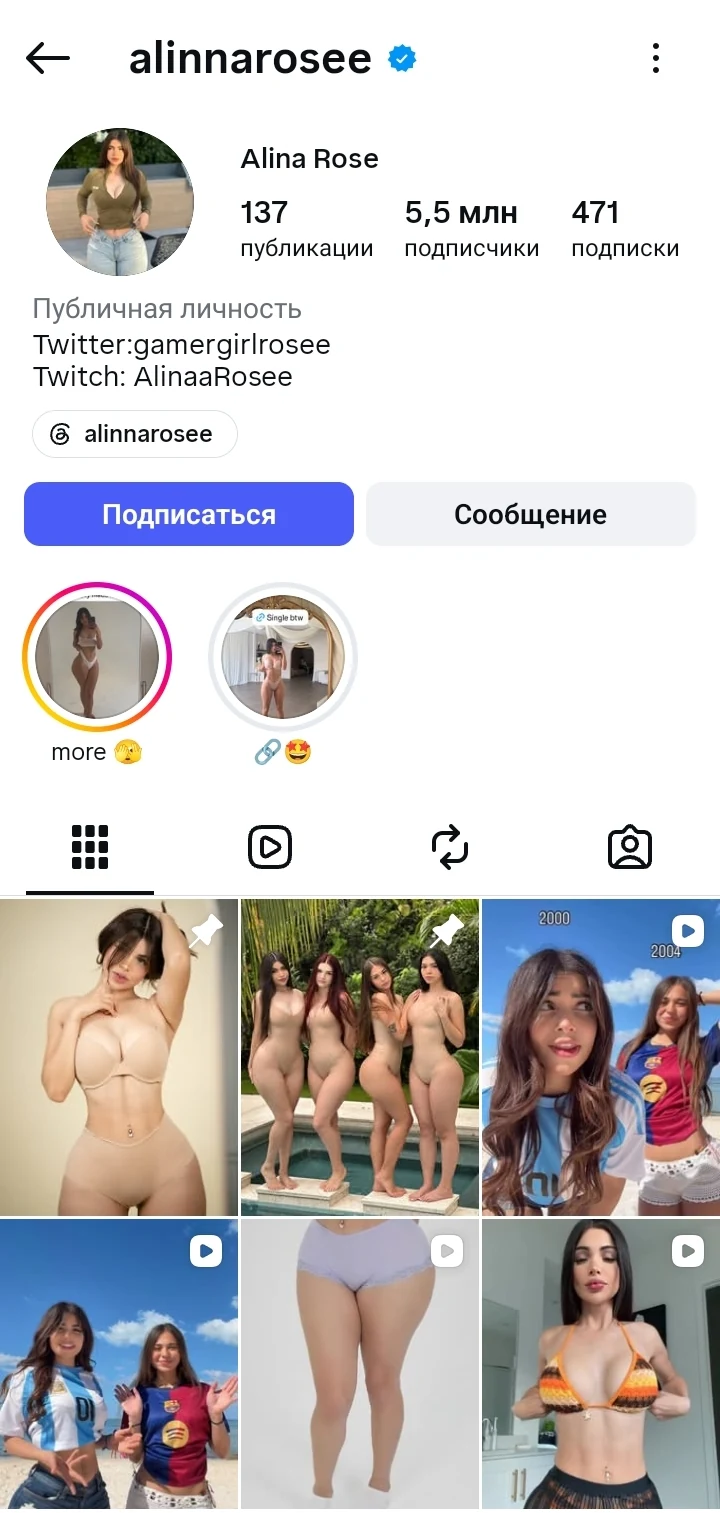

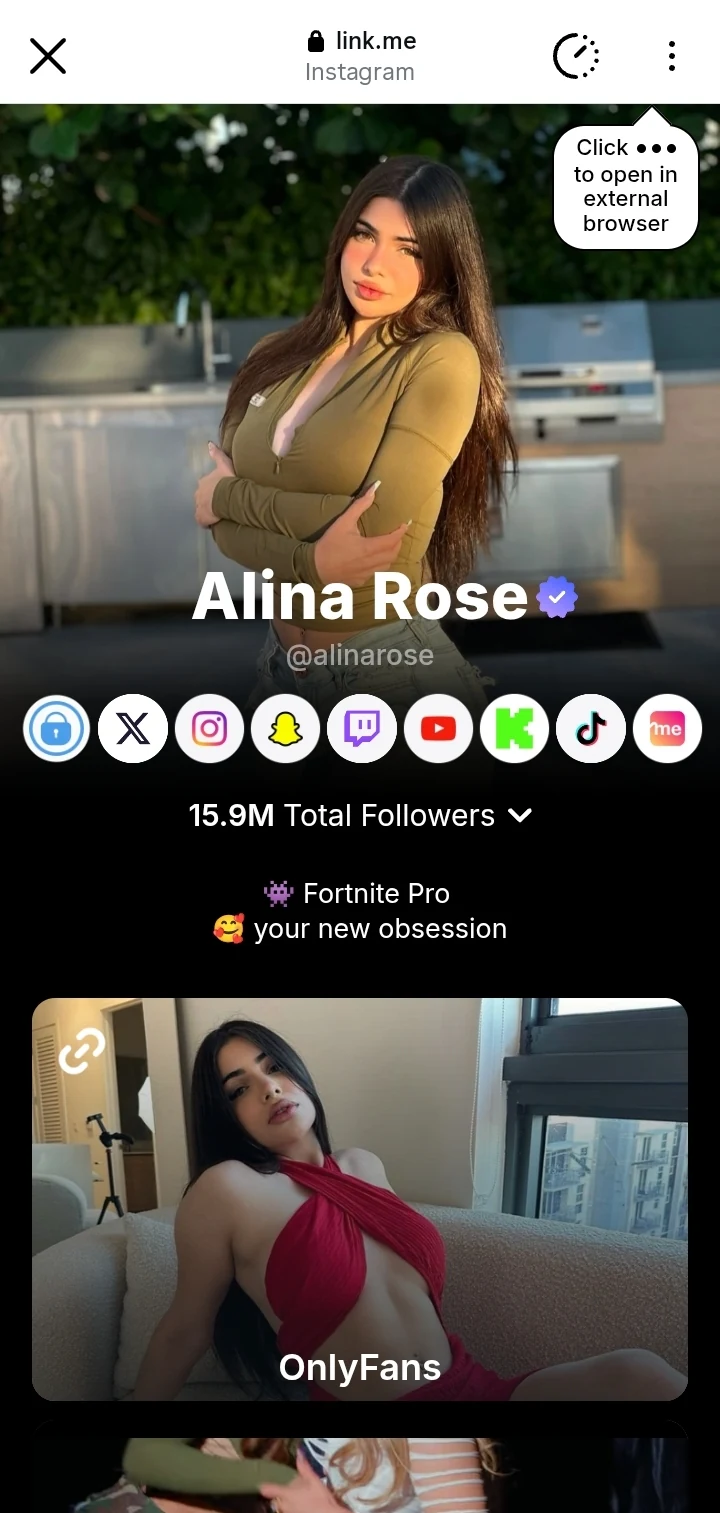
Across all three examples, the visible route is almost the same. It moves ready visitors toward a paid page and reveals little about people who need another reason to continue.
Open the steps to see where the interaction sits and what each stage records.
Start with the traffic sources already in use: stories, bio links, X posts, ads and chats. Each source needs a clear prompt that turns attention into a response.
The first screen asks for one low-effort response: choose, answer, vote, compare, or select a path.
The format should fit the creator’s positioning, audience interests, and monetization path. It may be a quiz, vote, look contest, mini-quest, or content unlock.
The result gives the visitor something concrete: a match, persona, recommendation, or next step. It can give them a reason to reply, share, or click again.
The final prompt sends the visitor to a DM, subscription link, special offer, or OF Free Trial Link. Analytics records the source, choices, result, and CTA.
ACEF adds a controlled interaction between public attention and the monetization path.
It gives the visitor one low-commitment action before the paid route: choose, answer, vote, match, unlock, compare, or rate.
That response creates a measurable engagement signal and can reveal what the visitor prefers before they reach the paid link.
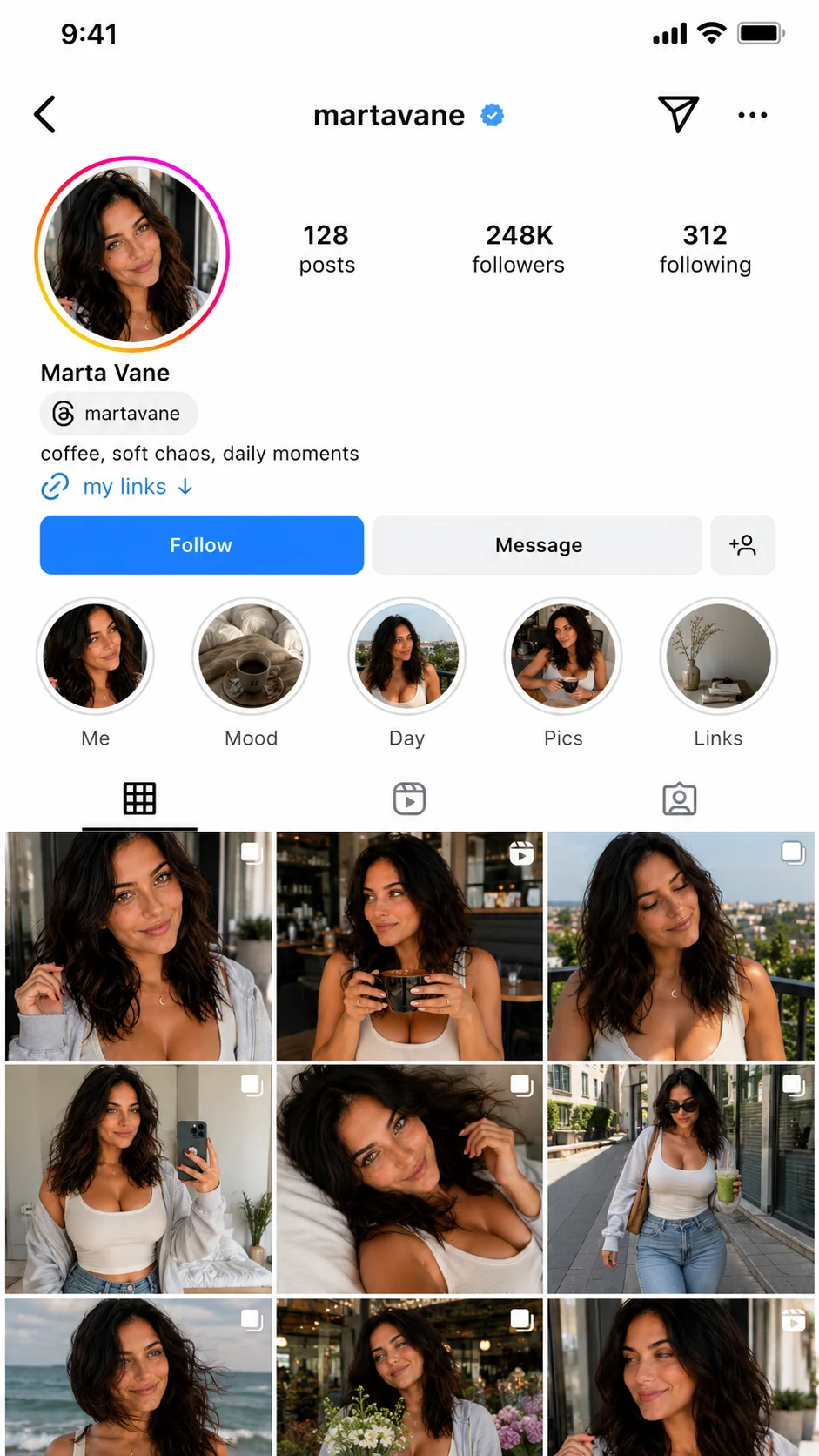
Marta’s Live POC uses five sequential choices because this is the clearest way to demonstrate the ACEF principle.
Five short choices in one clear sequence.
Formats and route length are built around the task.
In a production route, formats can be combined: a question, a challenge, a prediction, finding the right look, a mini-quest, a branching scenario, an unlock, or a handoff to a chatter. Custom JavaScript lets the interaction change shape as the person moves through it.
Route length is also a design variable. It may be one meaningful action, three denser steps, or five quick ones. Every step should deepen engagement, create a useful signal, or prepare the next contact.

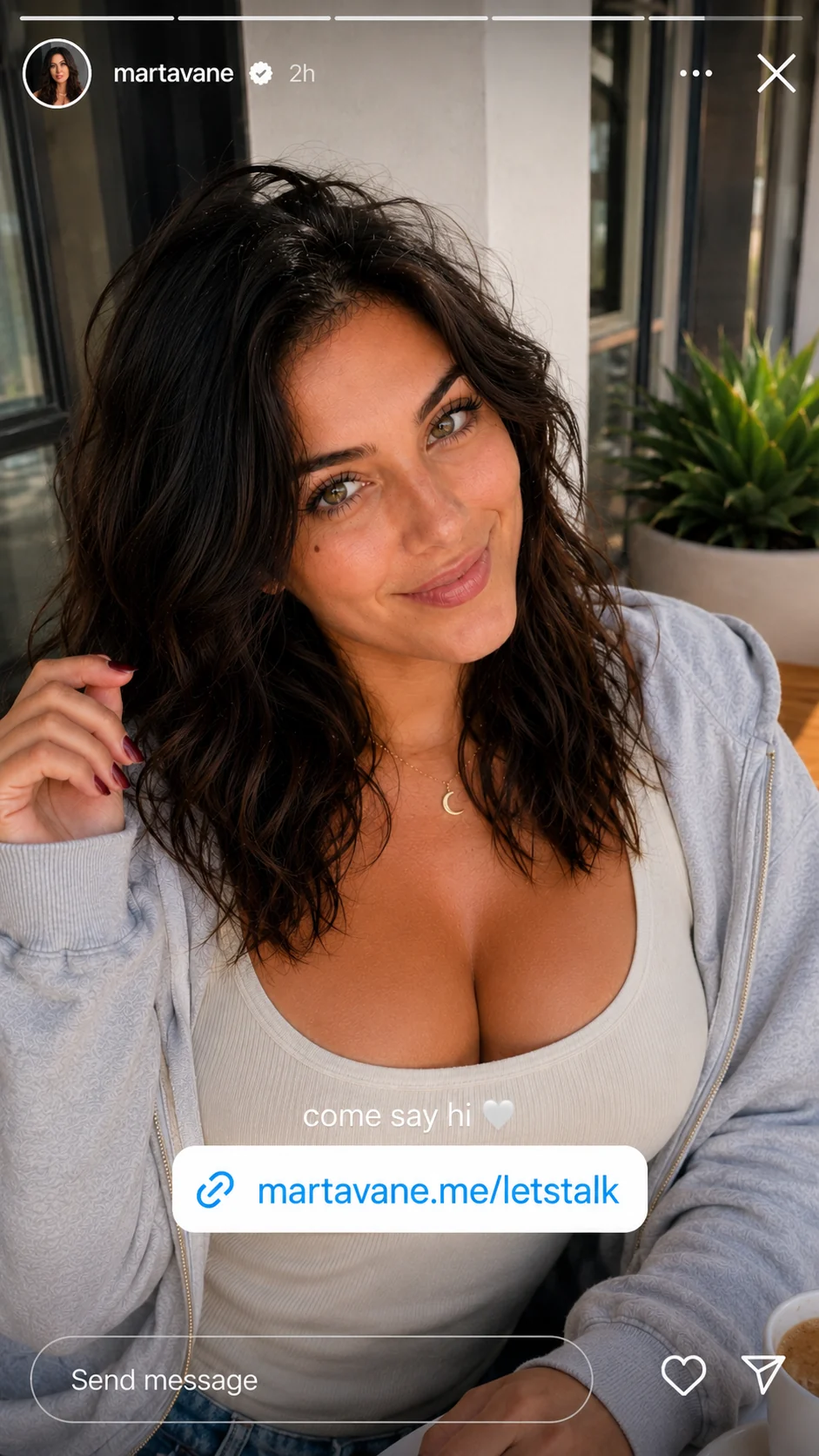
Hi, I’m Marta Vane — and I don’t exist.
Any resemblance to a real person is accidental. I was created for this proof of concept: a fictional girl-next-door creator used to demonstrate the route.
Imagine I have a social profile. Someone sees the account, taps a story link, and lands on a small interaction built for this demo.
That is where we start.
Demo state only: choices stay inside this page session and are not submitted anywhere.
Help me build our tiny plan. I’ll remember each pick until you start over.
This step tests the visual promise of the route: brighter date-night energy versus darker evening confidence.
This step separates softer social intimacy from a bolder evening tone. The choice can shape follow-up copy, CTA framing, and creative variants.
This step makes the creator feel less like a static profile and more like someone the audience can share an activity with.
This step tests the preferred leisure mode: active daylight movement versus relaxed, sensory downtime.
This final step changes the interaction from simple preference into a small act of participation. The visitor is no longer only choosing what they like; they are choosing what they would do.

Complete
Here is what you picked for me.
ACEF can pass context to the team: where the person came from, which mechanic they completed, what they chose, which result they reached, and which handoff they used to continue.
In Marta’s POC, the person chooses between a walk in the park and pool time. In the pool option, Marta appears soaking wet in a swimsuit. That makes the park choice a particularly interesting signal.
The chatter should not automatically decide that this person wants romance, conversation, or the feeling of a date. The choice gives them a reason to find out:
“You chose a walk in the park over pool time with me, even though I was there in a wet swimsuit. Interesting. What made the walk win for you?”
This is a specific way into the conversation, based on the person’s own actions.
Once enough people have completed the route, choices like this can be analyzed alongside chat starts, purchases, and revenue. Until then, the handoff has a simpler job: continue the interaction without losing its context and use that context to uncover what the person wants.
ACEF gives the person a small task: choose, decide, guess, find, or put something together. They invest attention and effort and help shape what happens next.
In Marta’s Live POC, the final step asks what she should have for breakfast. The person makes a small decision inside the scene, takes on a role in the interaction, and leaves with a reason to continue the conversation.
The choice stays attached to the next contact. A chatter can pick it up, continue from the same context, and open the conversation from a specific point.
A real mechanic would start from creator research:
Enough people through the route turn individual clicks into patterns.
This layer has three jobs:
give the person an action that shapes the interaction
carry the choice into a DM, paid route, or chatter conversation
connect a specific choice with further movement, chat starts, and purchases
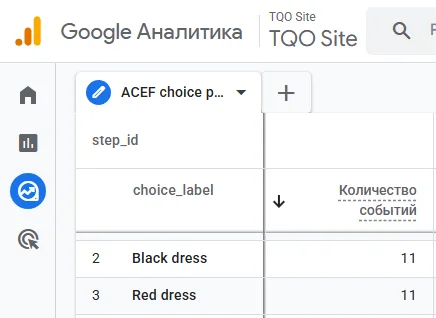
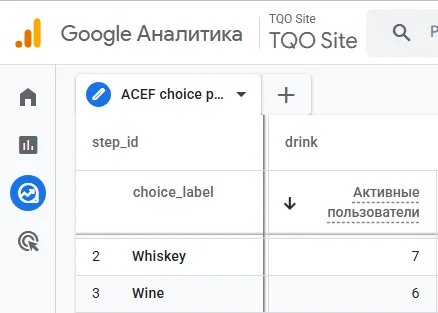
These are smoke-test screenshots from the Live POC. They show that the route sends choice-level events into GA4, so the mechanic can measure what people choose before the handoff.
GA4 sees outfit choices
The route records which option was selected, not just that someone clicked. Here, GA4 separates Black dress and Red dress selections.
GA4 sees drink choices
The same mechanic can track specific creator-route choices across steps. Here, GA4 separates Whiskey and Wine selections.
What if they already don’t?
Right now, you cannot tell whether a specific signal of interest converts at all.
Someone replies under an X post that they prefer black lingerie. They may then open the profile, tap the link, start a chat, and buy something. In the analytics, these remain separate events. The connection between “black” and the purchase disappears.
ACEF keeps that connection intact. The person makes the choice inside the route, reaches the platform with that context preserved, and gives the chatter a concrete opener for the conversation.
Yes, the route becomes slightly longer. The test is simple: does the captured interest lead to more meaningful chats and purchases? If not, remove the mechanic. If it does, the team can finally see which engagement makes money.
No more than a normal link-in-bio or multilink page. Technically, this is a web page.
The risk is not “because it is a funnel.” The risk is in what the page says, what images it uses, where the traffic comes from, whether there are shady redirects, and where the handoff sends people next.
No. We do not see a strict need to build this kind of route around explicit content.
But the explicitness lever exists — and it can be moved. You just need to understand the price.
An SFW route can be tested in mainstream traffic: Meta Ads, Google Ads, organic, social bio, Reddit, X, Telegram.
An explicit route narrows the channel list fast. Then it is less “let’s try it everywhere” and more adult ad networks — for example TrafficJunky / Pornhub inventory.
You know who already clicked your paid link.
You do not know how many people did not.
That is where part of the money lives. The funnel creates an analytics buffer between “I’m interested” and “I’m ready to go further.”
And it does not have to replace the direct link. You can compare the path through the route with the path without it.
Great. Then do not force everyone through the funnel.
Test it next to your DM flow. Or use it to prepare the DM: the person chooses context, shows interest, and arrives with a reason to message.
Are we saying game mechanics cannot create engagement?
That is the point.
The route should not lead nowhere. It should lead to the next step: paid link, FTL, DM prompt, manager flow, private-chat opener, or another handoff.
If you do not want to connect it to a paid route, fine. Then it becomes more of a research / engagement layer than a conversion route.
No.
What happens after the funnel is up to you and your team.
Inside the funnel, there is no fake DM, hidden chatter system, or impersonation layer. There is only the route, the user’s choices, and engagement metrics.
Not private identity. Route behavior.
Where the person came from, how deep they went, which steps they completed, what they chose, how often they interacted, and how many people continued further — for example to OnlyFans, Fansly, an FTL, or a DM.
If you operate in a GDPR zone, this depends on your consent setup: what the user allows is what you can properly collect.
If you and your team set it up properly, you own it.
The domain, hosting, GA4, GTM, pixels, paid links, destination accounts, GitHub repository, and the funnel itself.
We do not need to own your data. We need access to set it up, test it, and analyze it.
We expected that thought.
A quiz is just the easiest shape to understand in a Live POC. The actual format can be almost anything: a quest, an interactive map, a scripted choice route, a private-chat opener, a mini-game, a route to reward.
For example: “find the right photo and get a reward on OF.”
The shell is not the point. The point is whether it creates movement toward the next step.
Marta is fictional. Your route would not be.
So… now we can talk about the money part.
We are taking 2 early creator/team projects to build live proof for this new format.
You get an interactive creator route far below its future price. We get the right to document the work as a public or anonymized case study.
ACEF does not operate in isolation. Chat starts, purchases, and revenue also depend on traffic quality, creator content, the offer, pricing, chatter performance, platform conditions, and audience behaviour. The payment model should reflect which parts of that system each side actually controls.
The fixed fee covers the agreed work: research, mechanic design, route development, analytics setup, behaviour analysis, and iteration.
It pays for a defined scope of work that TQO delivers regardless of short-term revenue fluctuations.
A performance component can be discussed once there is a baseline, enough traffic, and a credible way to connect ACEF with chat starts, purchases, or revenue.
The fixed fee remains in place to cover the team’s work. The percentage becomes additional compensation for a measurable result.
If ACEF works, our original plan is still to keep working with you for a fixed fee and leave all of the additional revenue with you. But if you are absolutely determined to carve off a little of your own upside for us, well, all right — we are prepared to consider a fixed fee plus a performance share.
When a test uses paid advertising, the client funds the media budget. Advertising-platform spend is separate from TQO’s fee and must be agreed independently.
The client carries the media-spend risk. TQO is responsible for the quality of the research, route, measurement, analysis, and recommendations within the agreed scope.
TQO does not currently fund traffic from its own budget in exchange only for a percentage of the result. That would place the risks of advertising, product, pricing, chatter performance, platform restrictions, and attribution on the agency while giving it control over only part of the system.
A pure affiliate model may be considered later for a mature route with stable volume, proven unit economics, and transparent downstream data. It is not the model for testing a new hypothesis.
Pay what you can.
Suggested contribution: $150 / €135.
Minimum contribution: $100 / €90.
The sprint runs for about 3 weeks.
During that time, we research the route, build the first interactive funnel, set up GA4 / GTM tracking, watch how people move through it, and prepare a final recommendation: keep, change, expand, or stop.
For the first 5 continuing clients, early-client pricing starts from $390 / €350 per month.
This covers active funnel work: behavior analysis, mechanic updates, route improvements, GA4 / GTM review, and recommendations for the next move.
Clients who do not enter through the 2 founding case-study slots start with the regular beta setup:
$590 / €520 setup, then from $390 / €350 per month.
You can start on your own domain or use a temporary TQO subdomain for the first test.
The temporary subdomain keeps the test lean: no separate hosting spend before the route proves useful.
After the test, the route can move to your infrastructure or become a production-ready setup.
The base monthly retainer includes up to 2 active interaction contours.
An active contour is a route part we keep live, measure, and improve.
Each additional active contour adds $100 / €90 per month.
Regular mechanic replacement, route improvements, behavior analysis, and monthly iteration stay inside the retainer.
The base offer does not include paid traffic management, complex integrations, full website work, long-term content production, or custom backend logic.
These can be added to the scope after we agree on the work, price, and timeline.
The founding test stays focused on the interactive route, analytics, and the next recommendation.
We can build both SFW and NSFW routes.
The traffic plan changes with the content level.
SFW routes are easier to test with conventional traffic sources. NSFW routes are better suited for direct audience touchpoints, creator-owned links, organic posts, adult-friendly spaces, or adult traffic networks.
The first version can be one interactive route.
If it works, we can grow it into a creator-owned interaction environment: links, routes, quests, choice mechanics, social proof, offer tests, DM openers, handoff paths, and analytics.
The goal is a place where the audience chooses, clicks, moves, and leaves measurable signals.
Setup covers the first route build.
Expansion applies when the system needs a larger structural upgrade: client infrastructure, multi-page route, creator hub, complex integrations, or a production-ready rebuild.
Before any expansion, we agree on scope, price, and timeline. Nothing is added to the monthly scope without confirmation.
This is a case-study run, so applications go through direct contact.
To apply for a founding slot, write to us directly and tell us what kind of creator route you want to test.
Choose which optional categories you want to allow. Essential cookies are always enabled.